This blog is part of a longer series called ‘Organizing 101: Outrage to Organizing.’
< Last: How Your Experiences Inspire Change
Social media and activism are intertwined today. It’s important to know how to get your message and mission to the masses, and social media is one of the most efficient ways to do that. Think of social media as an extension of organizing: it’s where stories, actions, and relationships can make a big impact and spread your message and cause on a global scale.
In this blog, we’ll learn how to choose which platforms to use, how to post through an equity lens, and how to craft effective messages.
Using an Equity Lens on Social Media
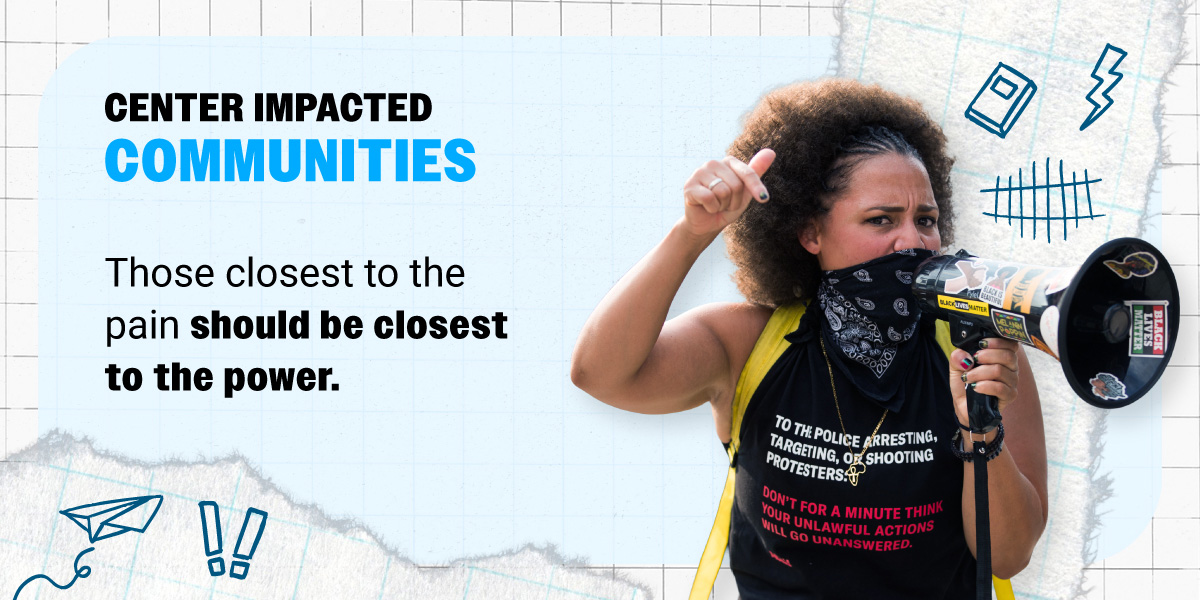
When posting about issues and causes that affect marginalized groups, remember, those closest to the pain should be closest to the power. Not everyone wants to be a spokesperson, so while it’s important to amplify voices from impacted communities, make sure they want that attention. Start by doing research and following prominent voices in different spaces. Don’t ask marginalized folks to do all the teaching.
Platform Overviews: Strengths & Best Practices
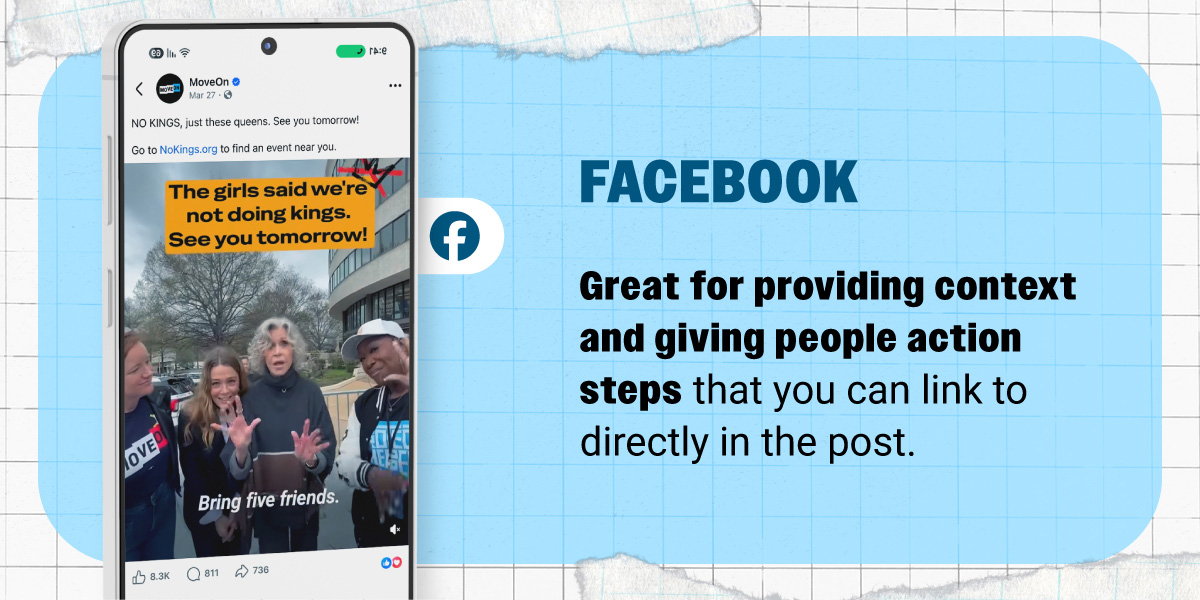
While it may feel like ‘no one is on Facebook anymore’ it’s still a powerful and large platform that’s best for local connections and groups. Facebook is a great place to share petitions, events, and phone bank invites. It’s easy to include links and you can explain things more in-depth, giving your audience everything they need in one post.
Tips:
- Keep posts short; lead with the key information that you want them to know right away.
- Like on any online platform, avoid arguing with trolls.
- Share authentic experiences and use visuals when it makes sense to get attention.
X (formerly known as Twitter)
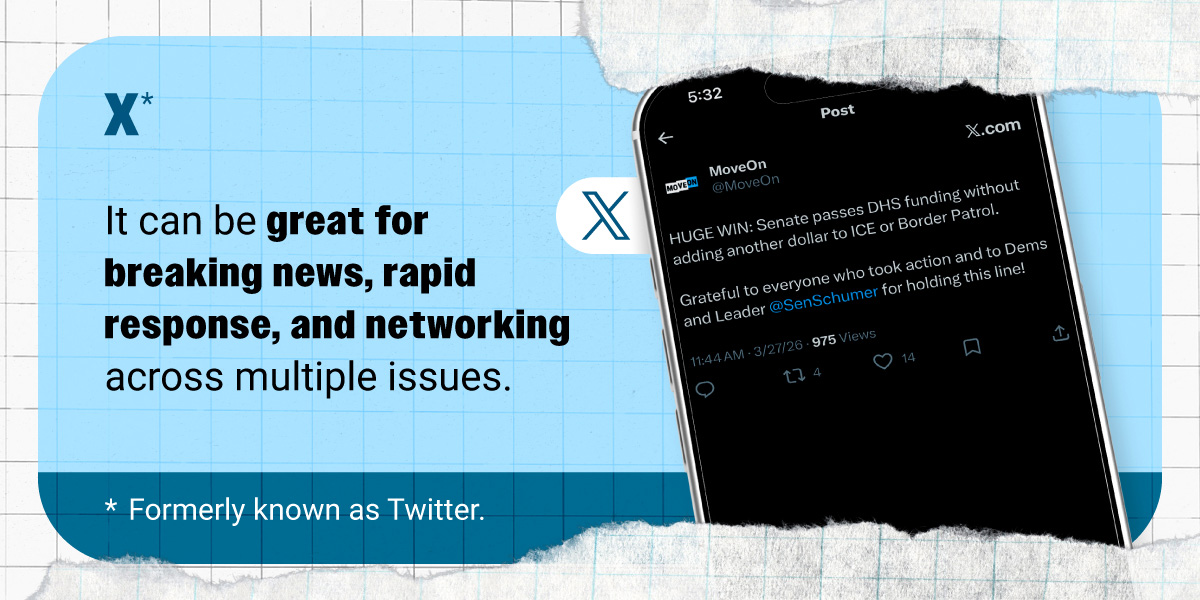
While X is now a different beast than Twitter was because of Elon Musk, many journalists, activists, and politicians still use it to carve out a space for the progressive movement. It can be great for breaking news, rapid response, and networking across multiple issues.
Tips:
- Don’t give space to misinformation by retweeting or quote-tweeting it.
- Even small accounts matter—micro-engagement still builds relationships.
- Use threads to give more information to followers, join hashtags, and engage authentically.
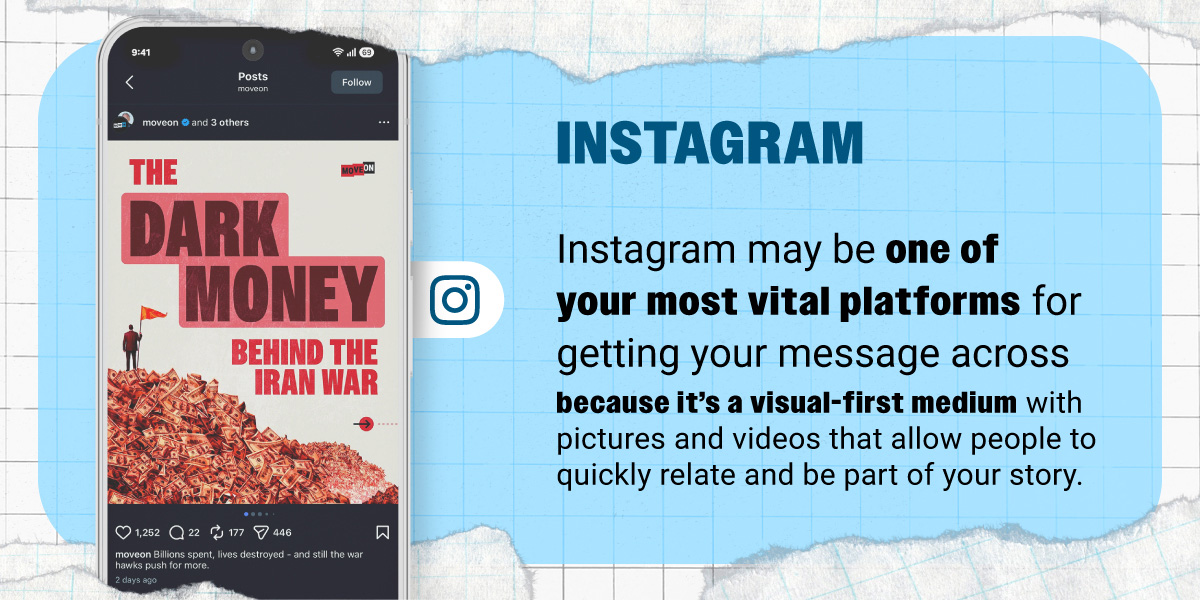
Instagram may be one of your most vital platforms for getting your message across because it’s a visual-first medium with more options than TikTok, and pictures and videos allow people to quickly relate and be part of your story.
Tips:
- Use stories, reels, and carousels to present your story in different ways.
- Don’t worry about likes. Comments and saves matter more.
- Share info-heavy graphics, tag other organizations, and post “tweet shots” (screenshots of tweets).
TikTok
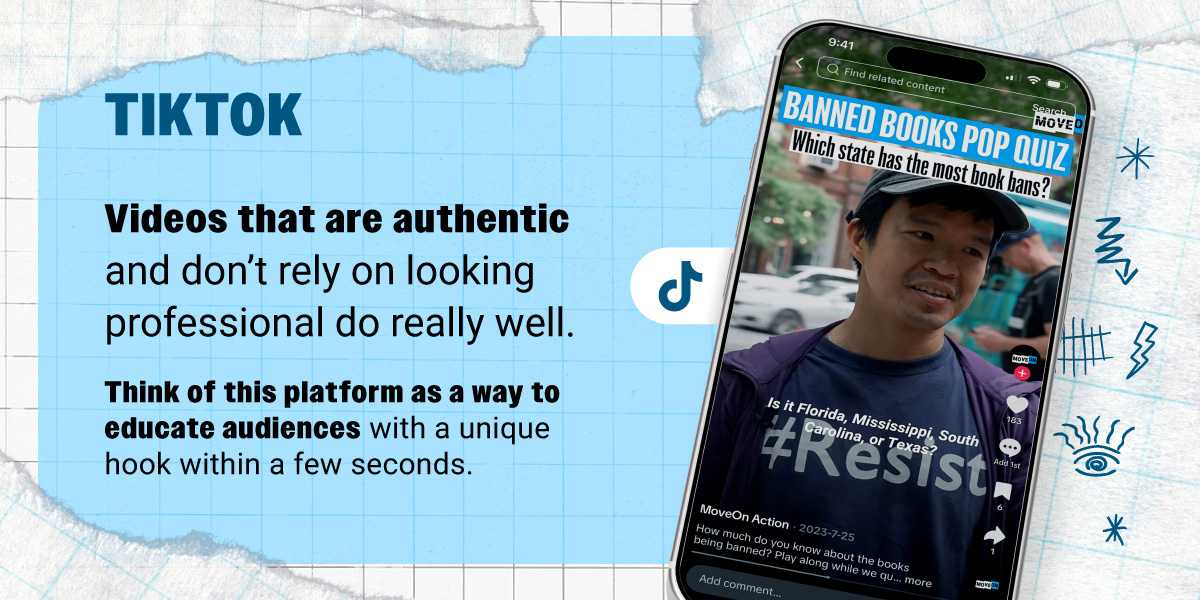
TikTok is a huge platform and can be incredibly helpful for getting your content out there and seen by a lot of people. It’s a video-only platform which may sound intimidating but you can create and edit videos easily in the app. Videos that are authentic and don’t rely on looking professional do really well. Think of this platform as a way to educate audiences with a unique hook within a few seconds.
Tips:
- Use trending music and sounds to get your content seen.
- Follow other political and progressive accounts.
- Don’t worry about making things look professional, just be authentic and share your story.
Developing Your Voice Online
Think about some of your favorite social media accounts. They most likely have personality and a point of view. Bring your personality to your profiles. Authenticity and consistency are what get you noticed and invite people to engage with you.
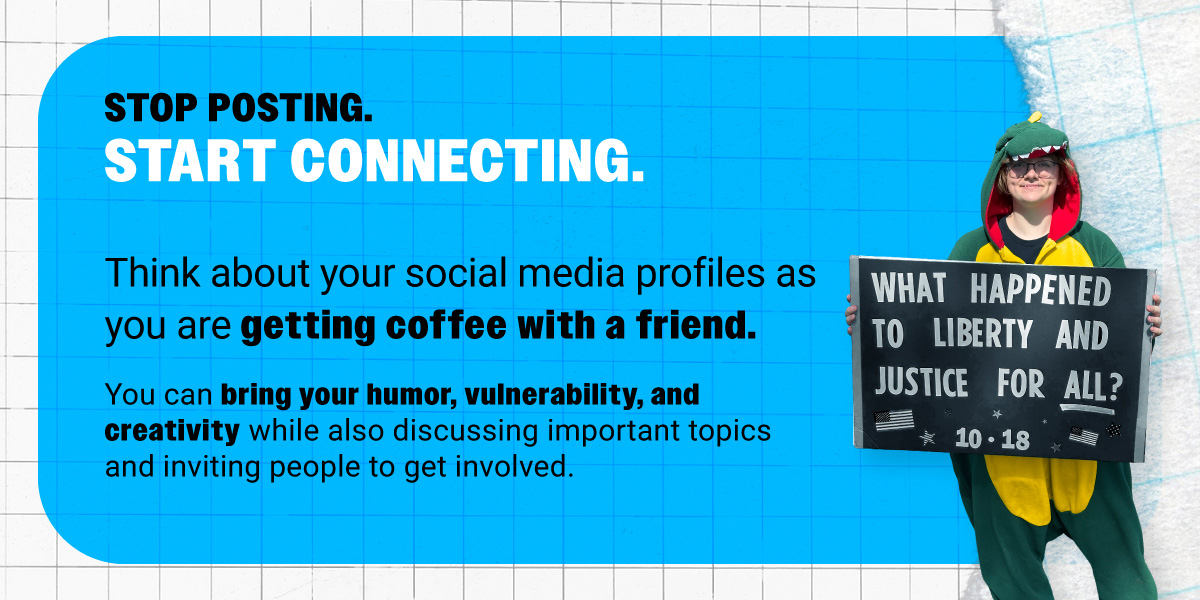
Think about your social media profiles as you getting coffee with a friend. You can bring your humor, vulnerability, and creativity while also discussing important topics and inviting people to get involved.
Crafting Effective Social Media Messages
When writing a social media post or creating a video, think about the end goal before you record or post. What do you want people to do? Do you want them to sign a petition? Call a representative? Show up to a protest or meeting? Always make your ask clear and timely.
If you’re not sure where or how to start when creating social media posts around an issue that’s important to you, try this formula:
- Name the issue.
- Share your personal story or stake.
- Why should your audience care about this? Relate to them.
- End with a clear call to action.
Sometimes good stories don’t always gain traction. If you’re having trouble getting eyes on your social media posts, try using photos and videos. If you post something that does particularly well, figure out what worked and repeat it. Was it the length of content? Did you attach a video, graphic, or image? There’s no need to reinvent the wheel.
Remember: Learning Your Platforms and Use Your Voice
Remember, equity and amplification matter as much as content. If you’re talking about marginalized groups, do the research and those closest to the pain should be closest to the power.
If there’s a specific social media platform you like the most, use that one! This shouldn’t feel like a chore—choose something that’s fun to do! Social media is organizing and it doesn’t need to be perfect to have an impact. Posting on social media can build relationships, tell stories, and drive action.
Next in the series, we’ll learn about the power of social media when it comes to organizing.