This blog is part of the series ‘Organizing 101: Outrage to Organizing.’ We just learned about the power of the messenger and now we’re going to learn about the power of your story.
Becoming a leader in your community isn’t just about strategy or tactics — it’s also about the stories we tell. Our stories help us connect, persuade, and inspire others to take action.
In this blog, you’ll learn how to craft and share your stories to build power that will help advance your cause.
Why Stories Matter
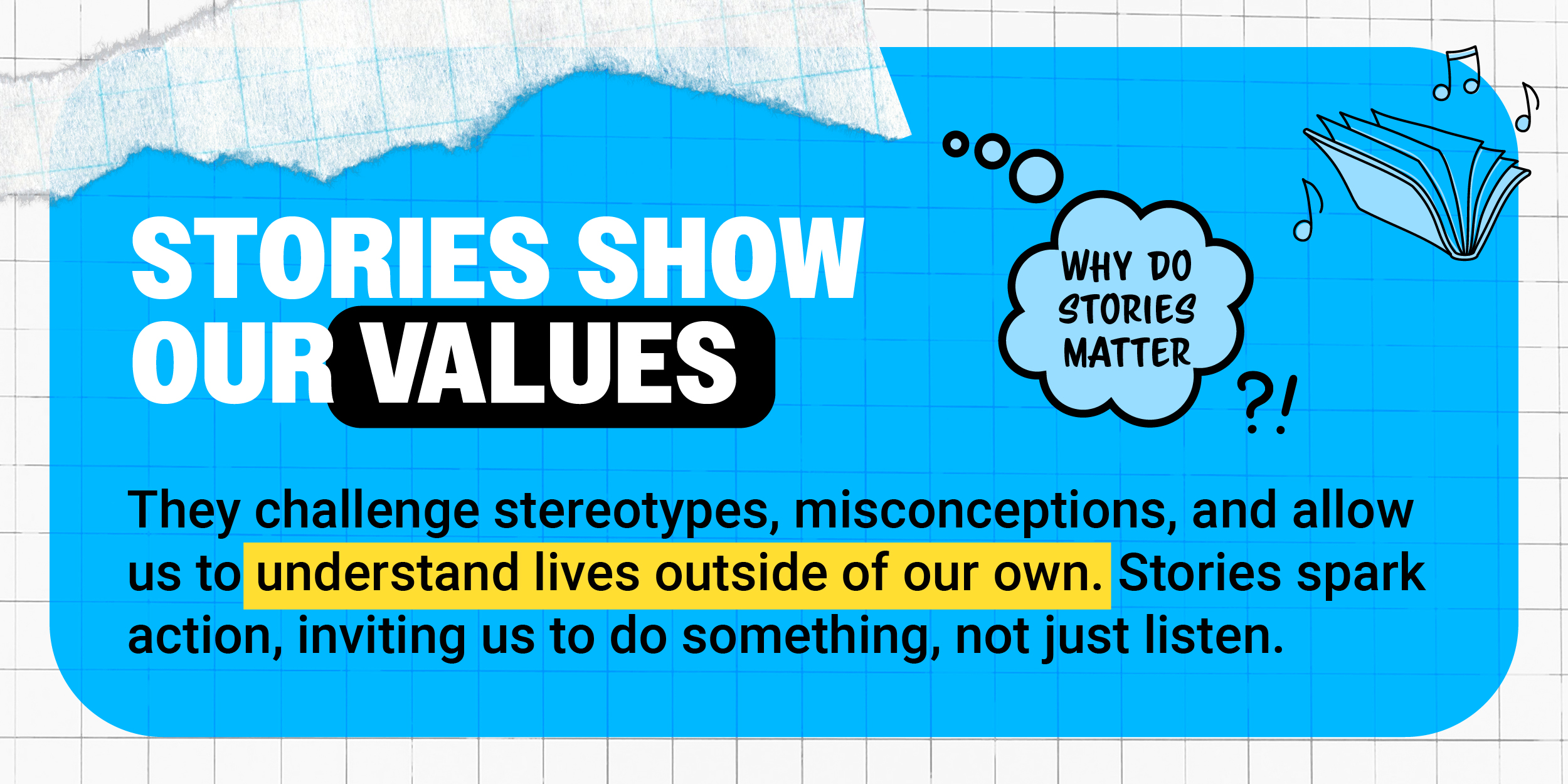
Stories show our values. They demonstrate what we care about without prescribing values or rules on how someone should live. They challenge stereotypes, misconceptions, and allow us to understand lives outside of our own. Personal stories cut through the noise of the news, social media, and AI. When we hear stories that make us feel something, it makes these overarching policies, and technical terms, real, human and easier to understand. Stories spark action, inviting us to do something, not just listen.
The Public Narrative Framework
Developed in organizing, the public narrative framework is a structured way to share stories that motivate others to get involved.
The public narrative framework contains three parts:
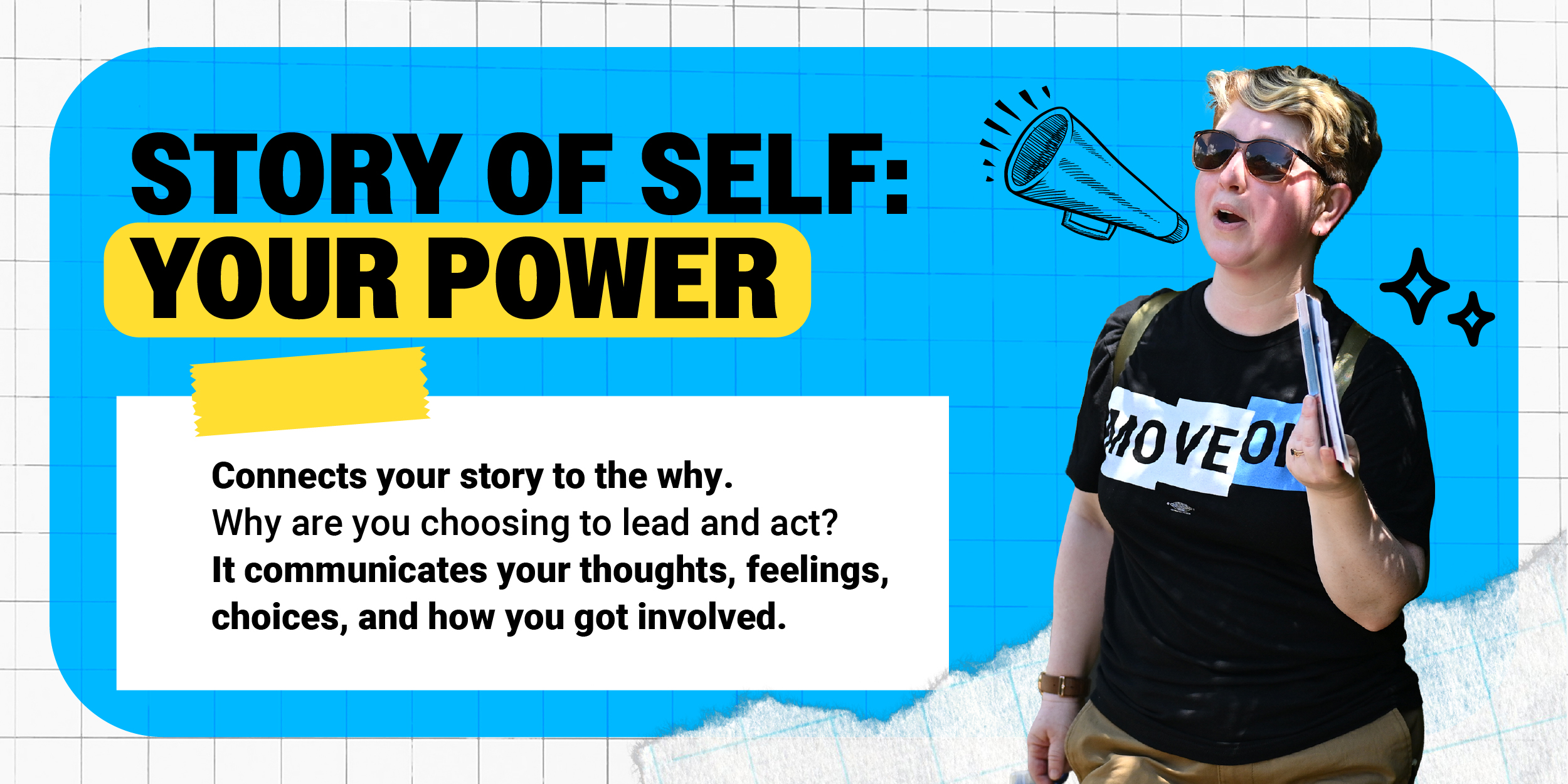
- Story of Self – Connects your story to the why. Why are you choosing to lead and act? It communicates your thoughts, feelings, choices, and how you got involved.
- Story of Us – This is the story that connects your experience to your audience. This story highlights what you all have in common and how it connects to the larger struggle you’re fighting against.
- Story of Now – This is how you tell people what to fight against immediately and why. It invites others to act with you quickly because you’re describing what’s in front of their face.
Story of Self: How to Share Your Journey
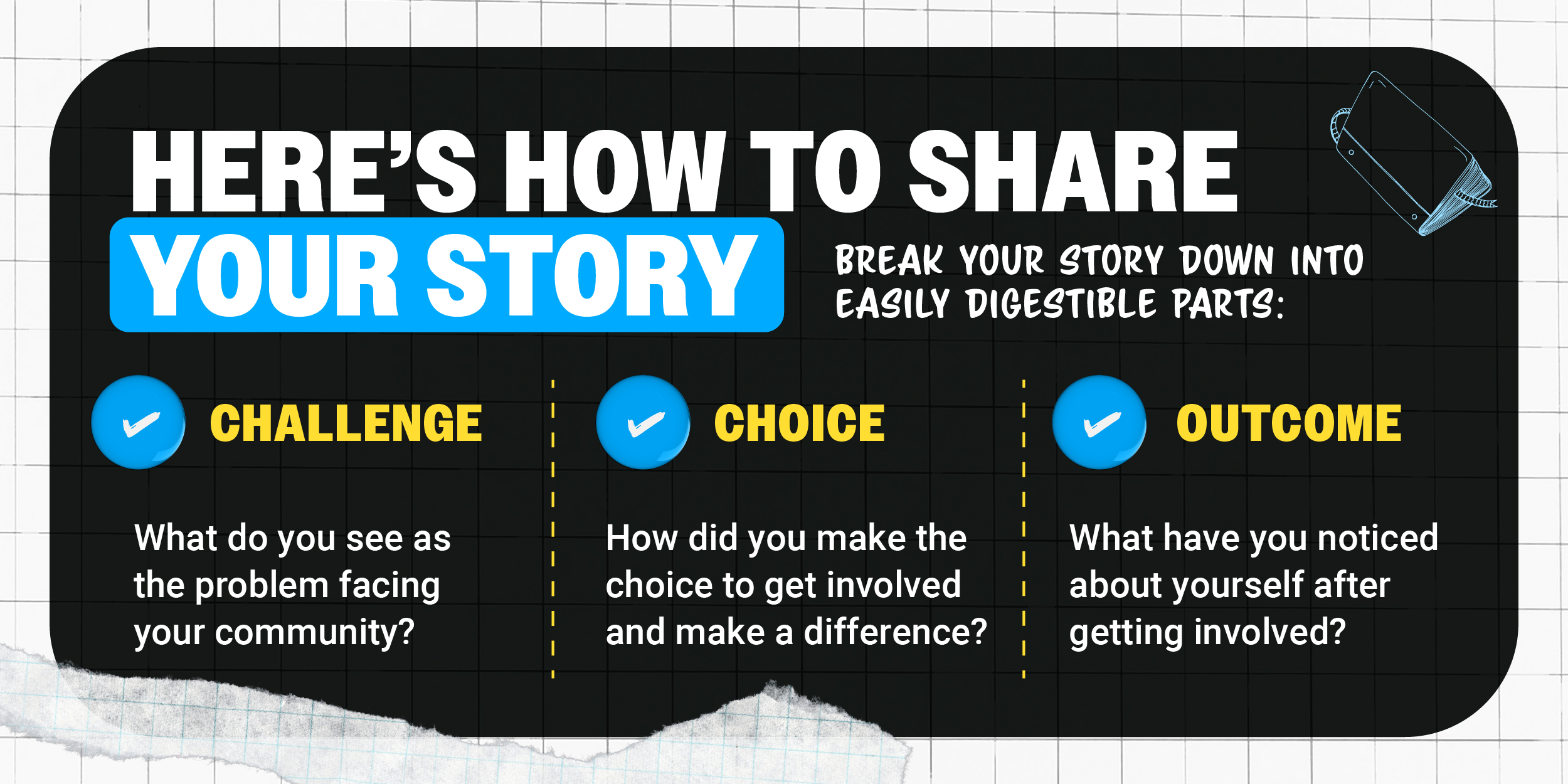
First, break your story down into easily digestible parts.
- Break it into the
- Challenge→ What do you see as the problem facing your community?
- Choice→ How did you make the choice to get involved and make a difference? Share what moves you.
- Outcome→ What have you noticed about yourself and your community after getting involved? What outcomes have you noticed?
- Be vulnerable — it’s okay to show anger, hope, fear, or joy authentically. It’s what makes your story relatable and impactful. People want to get to know you and why you got involved.
- Use “I” statements — your story is unique and powerful. Own it.
Story of Us: Building Collective Power
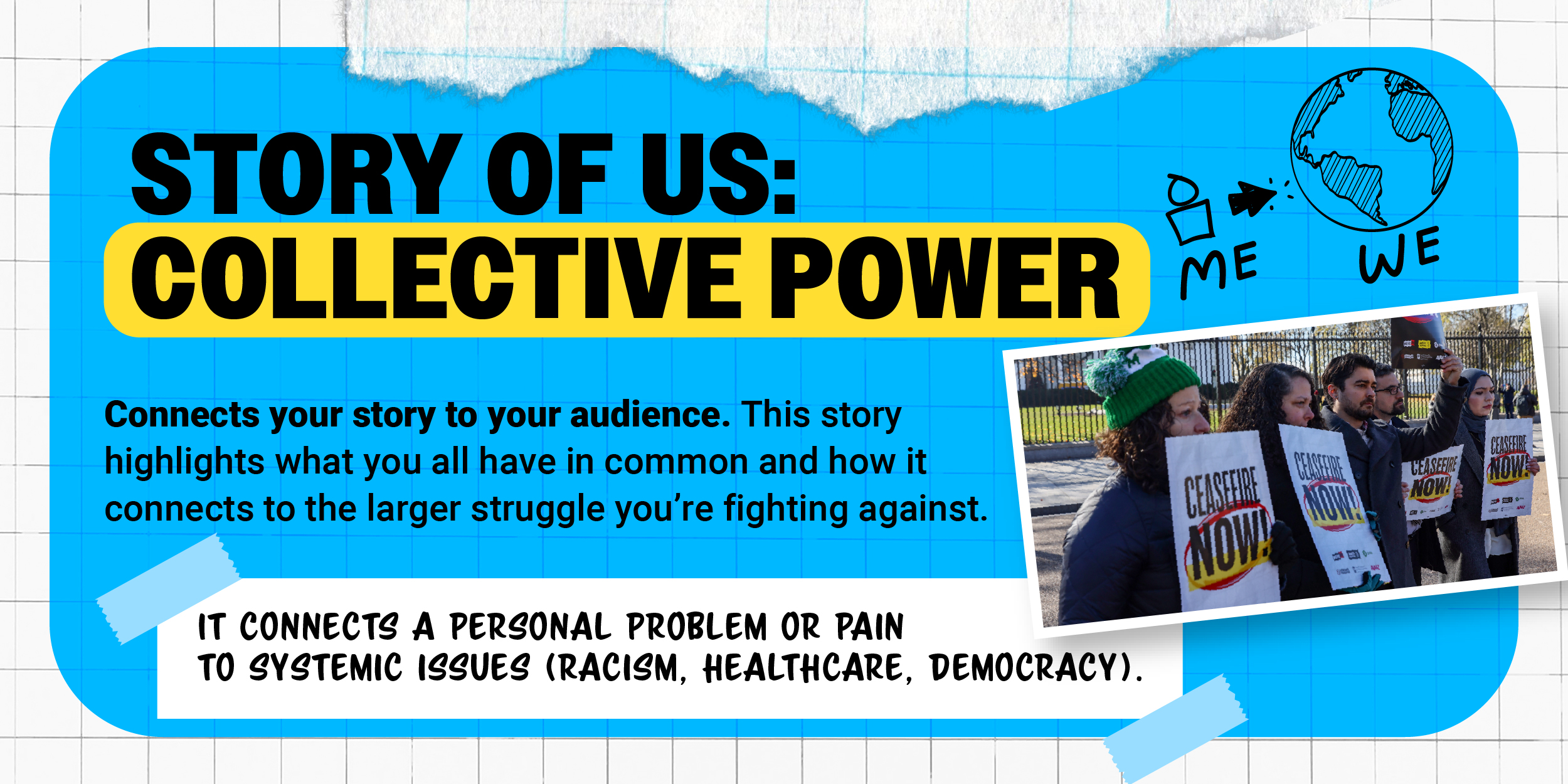
- This moves your story from “me” to → “this happens to many of us.”
- It connects a personal problem or pain to systemic issues (racism, healthcare, democracy).
- It shows that because it affects many, collective action is possible and makes a difference.
Story of Now: Inspiring Immediate Action
- Because you’ve connected your personal story to a bigger issue, you can now discuss the urgency of getting involved.
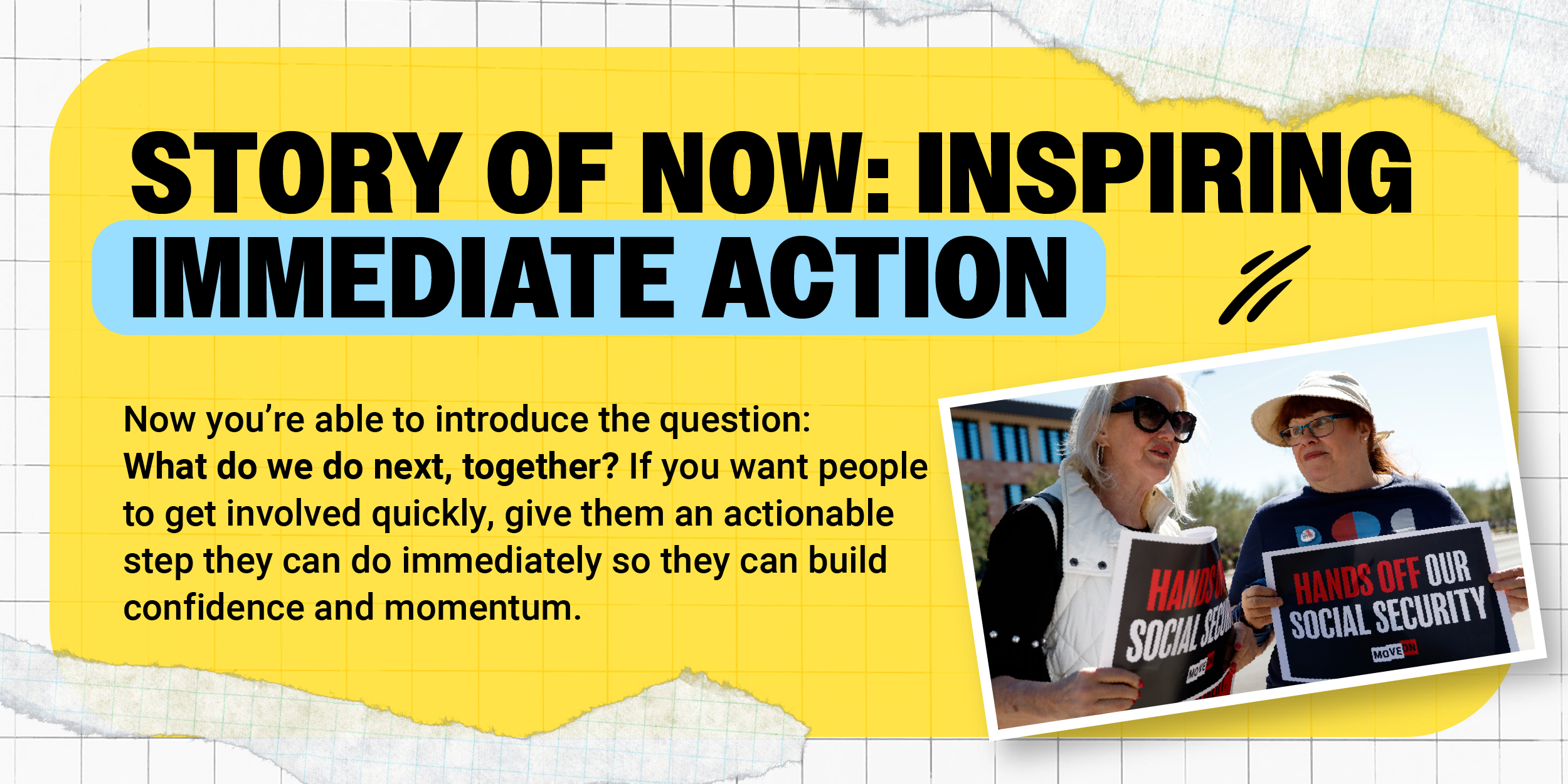
- Now you’re able to introduce the question: What do we do next, together?
- If you want people to get involved quickly, give them an actionable step they can do immediately so they can build confidence and momentum.
- For example:
- Phonebank tonight to pass this bill.
- Post to social media tonight about the issue you’re fighting for
- Attend a meeting tomorrow
- For example:
Your story is enough
No one’s story is too boring or too small. You telling others what, why and how you got involved is inspiring and can make a mountain of a task like improving your community feel accessible for those who want to get involved but don’t know how to start.
How to Practice and Share Your Story
When thinking about sharing your story, remember our writing prompt: challenge, choice, outcome. Practice what you want to tell people and ask for feedback on it.
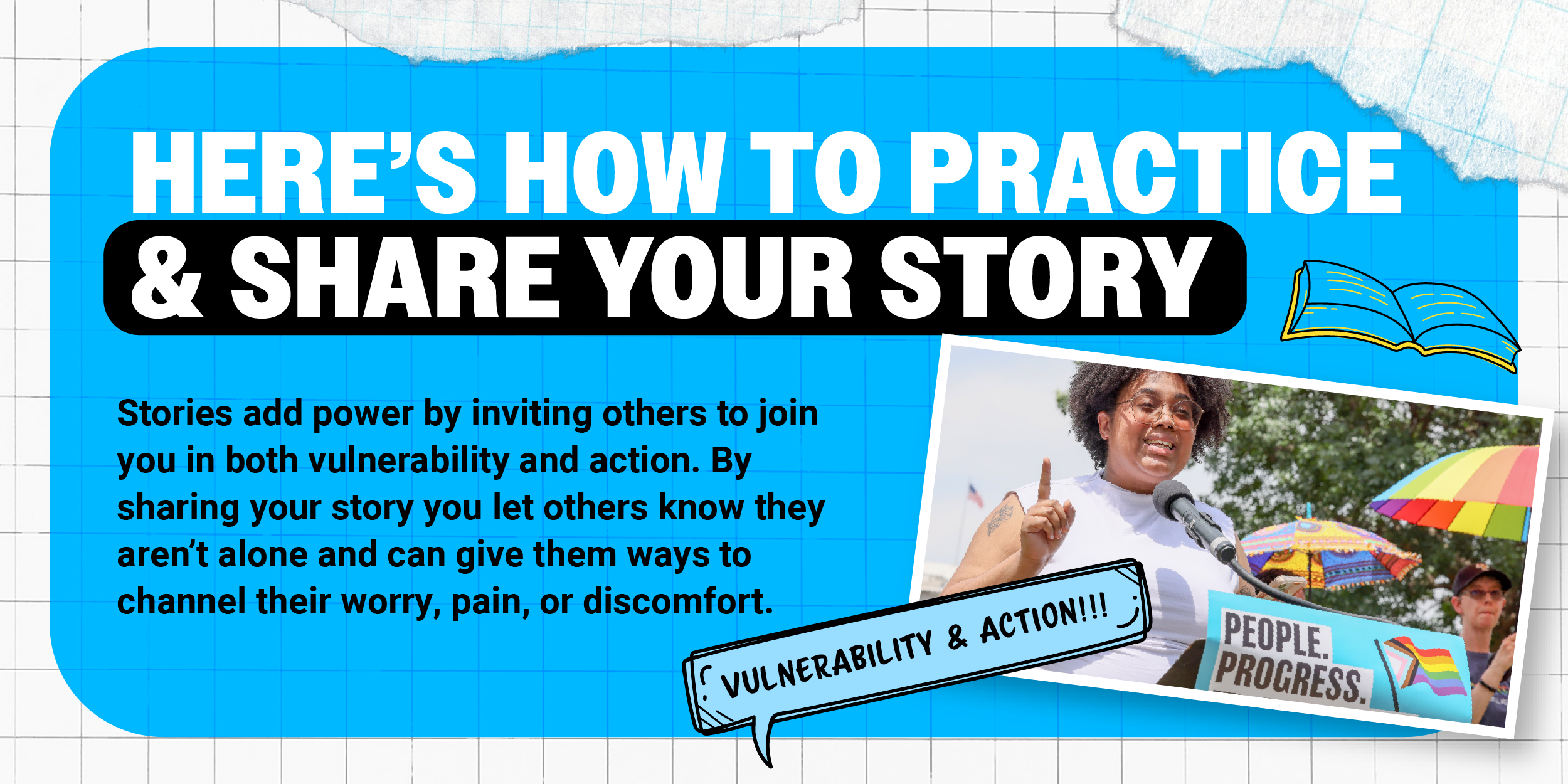
Stories add power by inviting others to join you in both vulnerability and action. By sharing your story you let others know they aren’t alone and can give them ways to channel their worry, pain, or discomfort.
Next in the series: you’ll learn how to learn your platform and use your voice.