This blog is part of a larger series ‘Organizing 101: Outrage to Organizing’
We just learned about organizing basics, the power of people coming together, and how to get attention for your issue.
Now we are going to learn about what makes an effective action and how to move from activity to impactful action.
Action vs. Activity
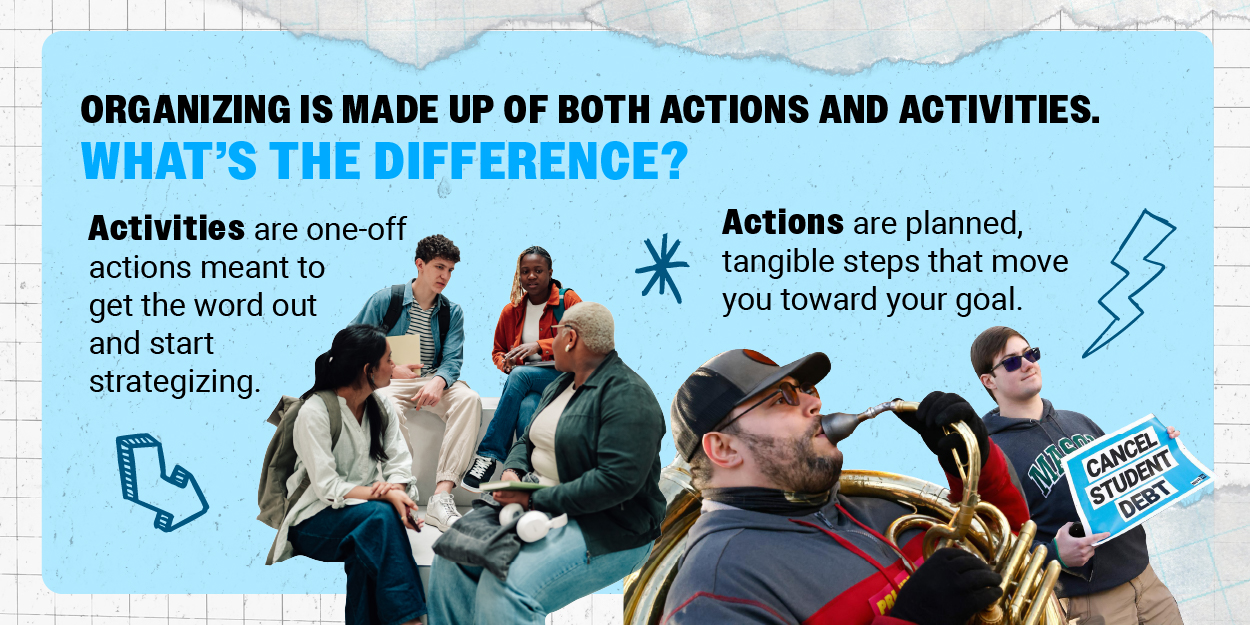
Action is part of a larger campaign, directed at a specific target audience, and used to provoke a reaction and move systemic change. For example, action would be creating a petition for a specific issue with a clear demand, then delivering the petition with a protest and creating follow-up actions to hold the decision-maker accountable.
Activity is a one-off effort, such as a film screening or a generic rally that get the word out to start strategizing.
The reason it’s so important to differentiate action from activity is because actions build momentum and one-off activities risk burning out your base.
How do you make sure you create action instead of activities?
Features of Effective Actions
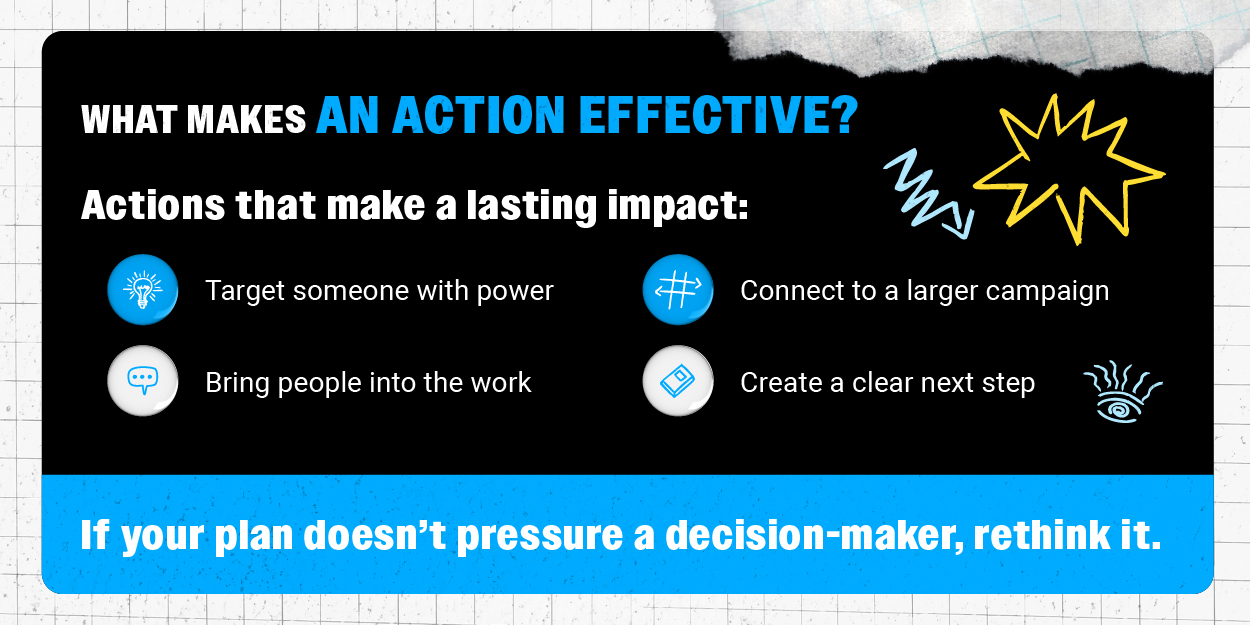
Relationship building: Actions are opportunities to build relationships with like-minded people. An action is a touch point by which you invite people into the work, and the relationship building helps sustain and retain your efforts.
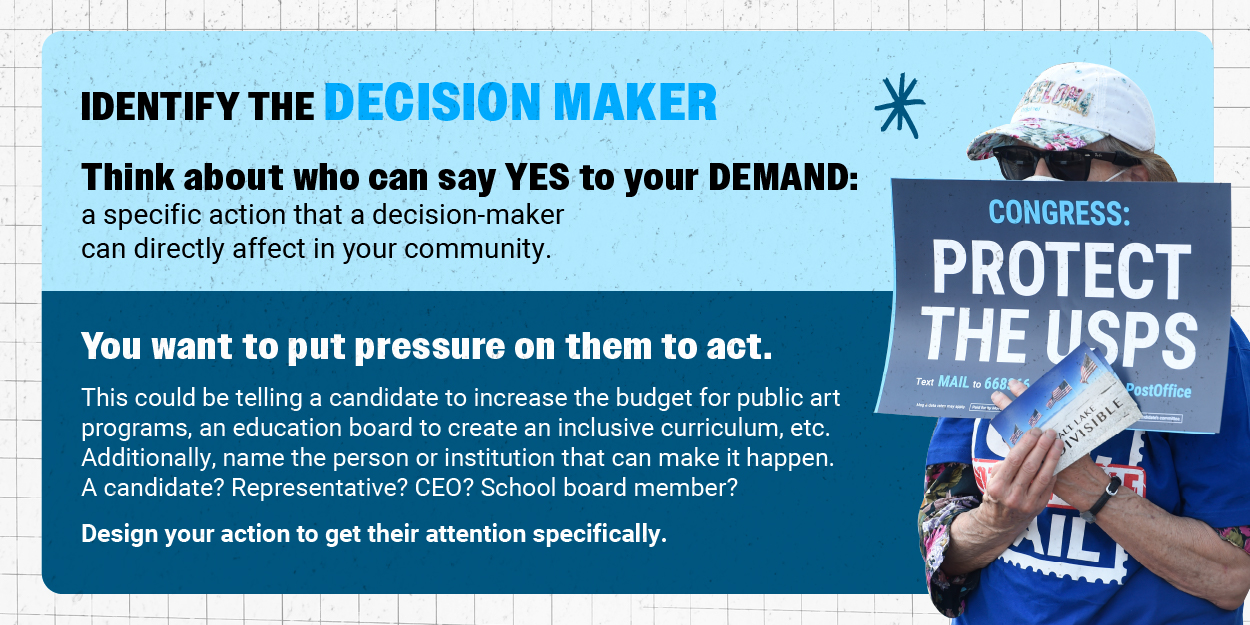
Always focus your energy around a clear target and identify the reason that this is your clear target (specific decision-makers, not vague audiences).
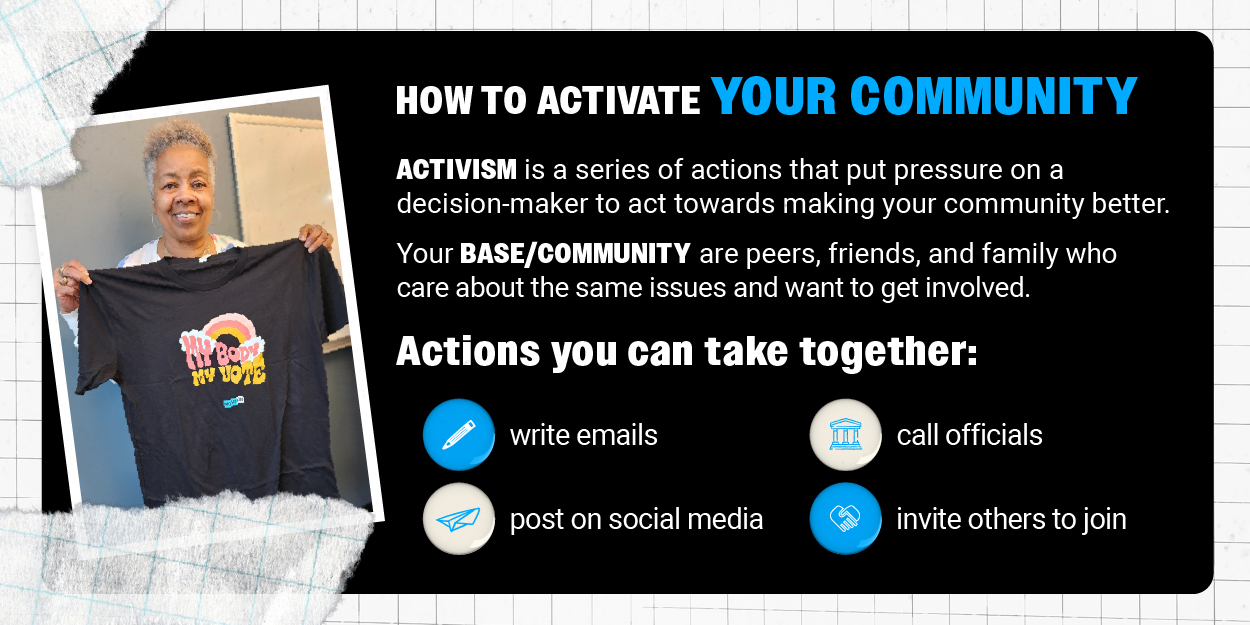
Your supporters are the ones who will ride with you at dawn! Activate your base to get them involved instead of using them as a form of counting heads.
Remember, your actions are part of a larger campaign. They aren’t the end points, so when thinking of actions to take, try to think of the next step. For example, if you want to create social media posts for an issue, think, “What next?”
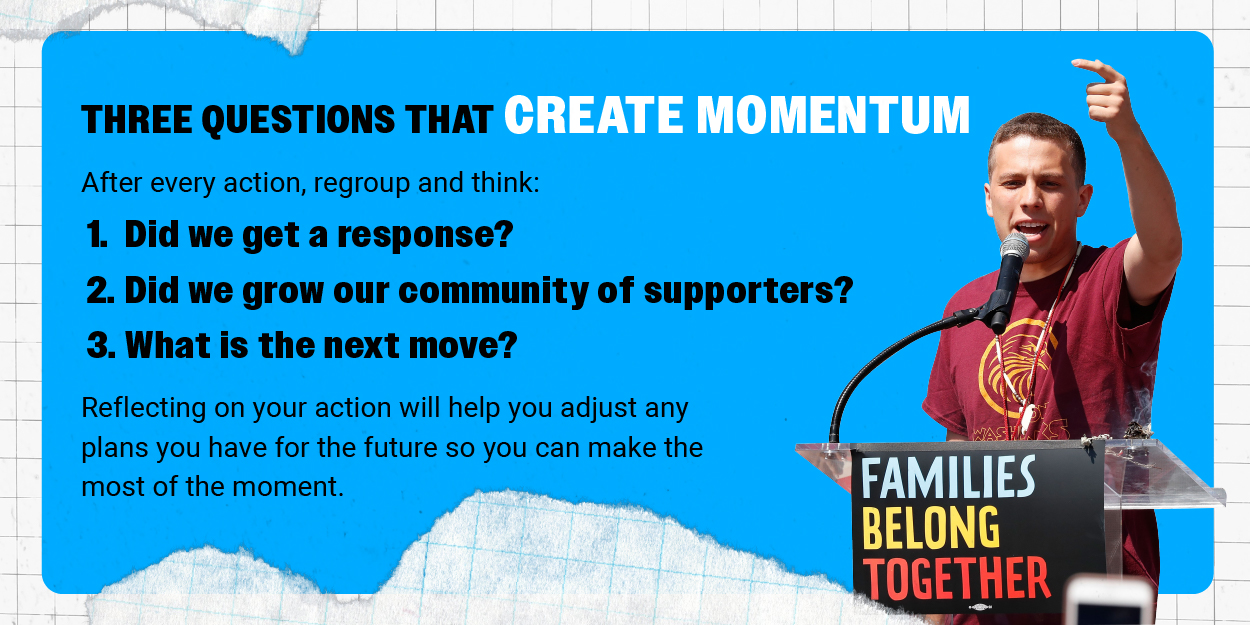
Actions are evaluated by their impact. Did you get the reaction you wanted from your protest, social media video, petition, etc.? If so, what comes next? If not, what else could get you the impact and reaction you want from your base and decision-makers?
Real-World Examples
University Divestment Campaigns
- In the 1980s and again in the 2000s–2010s, students across the U.S. organized for their universities to divest from fossil fuels or apartheid-linked corporations.
- Actions included teach-ins, sit-ins, marches, and symbolic events (like mock “oil spills” on campus).
- Clear target: university presidents, trustees, and investment boards.
- Outcome: Many universities shifted policies, divesting billions of dollars and legitimizing the divestment movement globally.
- Key lesson: Sustained, targeted student pressure works when directed at decision-makers with real power.
Delano Grape Strike (1965–1970)
- Led by Filipino farmworkers (AWOC) and later joined by Mexican-American workers (UFW, led by Cesar Chavez and Dolores Huerta).
- Workers walked off fields, demanding better pay and conditions.
- Tactics included picket lines, national boycotts of grapes, and marches that drew public sympathy.
- Clear target: grape growers, with pressure extended to supermarkets and consumers.
- Outcome: After 5 years, growers signed contracts granting better wages and protections.
- Key lesson: Combining strikes, consumer boycotts, and coalition building can force powerful industries to concede.
Truth Initiative “Zombie Walk” (2009)
- Youth advocates dressed as zombies and marched through Washington, D.C., ending at a Walgreens store.
- Clear target: Walgreens and other retailers profiting from tobacco sales while marketing as “family-friendly.”
- Theatrical, media-friendly action drew attention to corporate hypocrisy.
- Outcome: Walgreens and CVS came under mounting public pressure; in 2014 CVS announced it would stop selling tobacco products.
- Key lesson: Creative, small-scale actions can generate outsized media coverage and accelerate corporate change.
Tactics to Consider When Taking Action
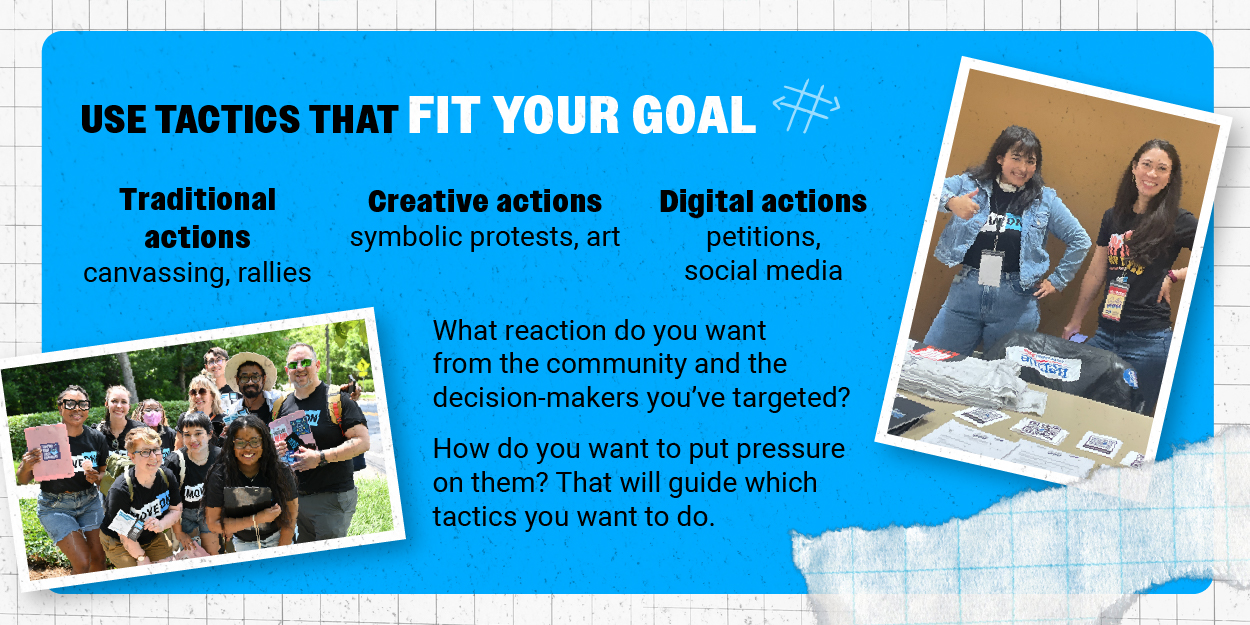
There are a number of different ways you can take action to create momentum and longevity for the issue you’re trying to change.
Actions can be split up into a few categories. No action is necessarily better than the other, but you can mix and match whatever works best for you and your base.
- Traditional: canvassing, phone-banking, lobbying, rallies, op-eds
- Creative: performance art, such as flash mobs or plays; public art installations; staged protests; symbolic deliveries, such as planting a garden in an industrial area or making an art car and parking it in front of city hall
- Digital: creating and sharing online petitions, creating social media posts and videos, inviting your base to make coordinated calls to decision-makers
Think about actions that you’ve seen in the wild that you applauded and what types of actions energize you. Match this with the reaction you want from decision-makers and wider audiences for the most impact.
Planning for Success
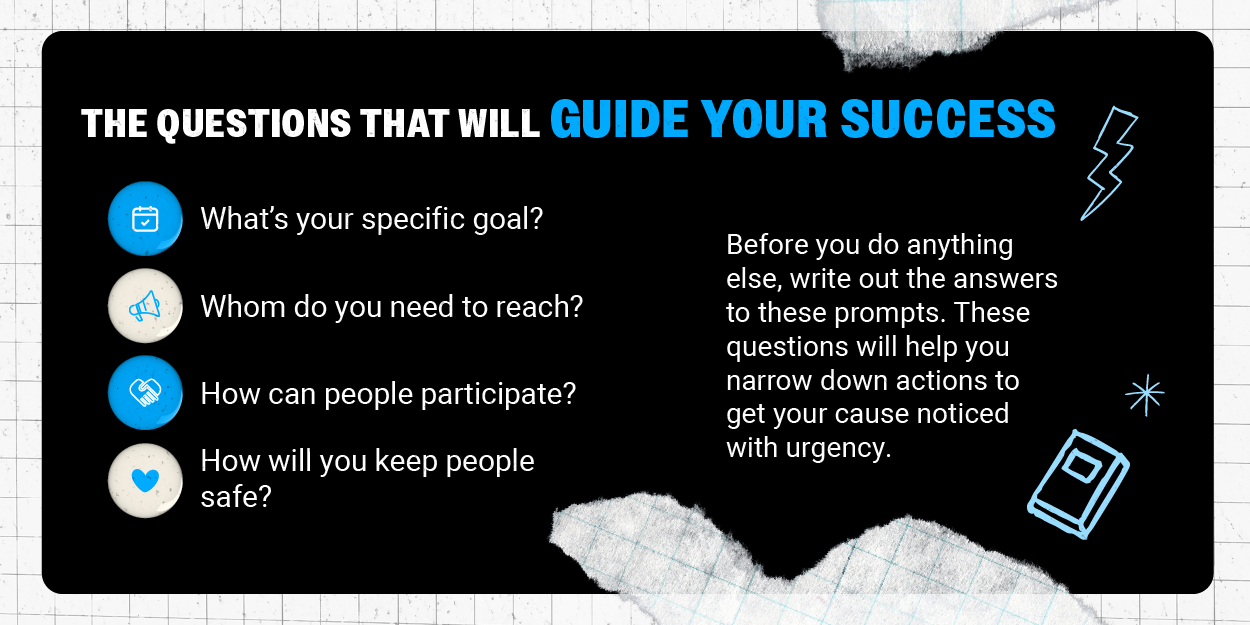
Just like anything else, it’s best to make a plan so you’re sure what success looks like.
Be clear on your goals. Before you start organizing an action plan, define what reaction you want from your audience.
Get people to engage with your actions by reaching out to a wide audience beyond your base through email or social media along with personal asks to your community through phone calls or one-on-one chats.
It’s important to be mindful of the accessibility of your action and your audience. You will most likely need to think about your base’s preferred language, their transportation, if they’re a caretaker, if they need ASL interpretations. You may not be able to satisfy everything that someone needs, but be extremely clear when you’re inviting them to join you about what is accessible.
Research and utilize resources around safety. Think about educating your base on digital security—for example, a police officer cannot look through your phone without a warrant. Assess the risks of the event and plan accordingly, thinking about exit strategies and what to do if anyone needs care.
Measuring Success
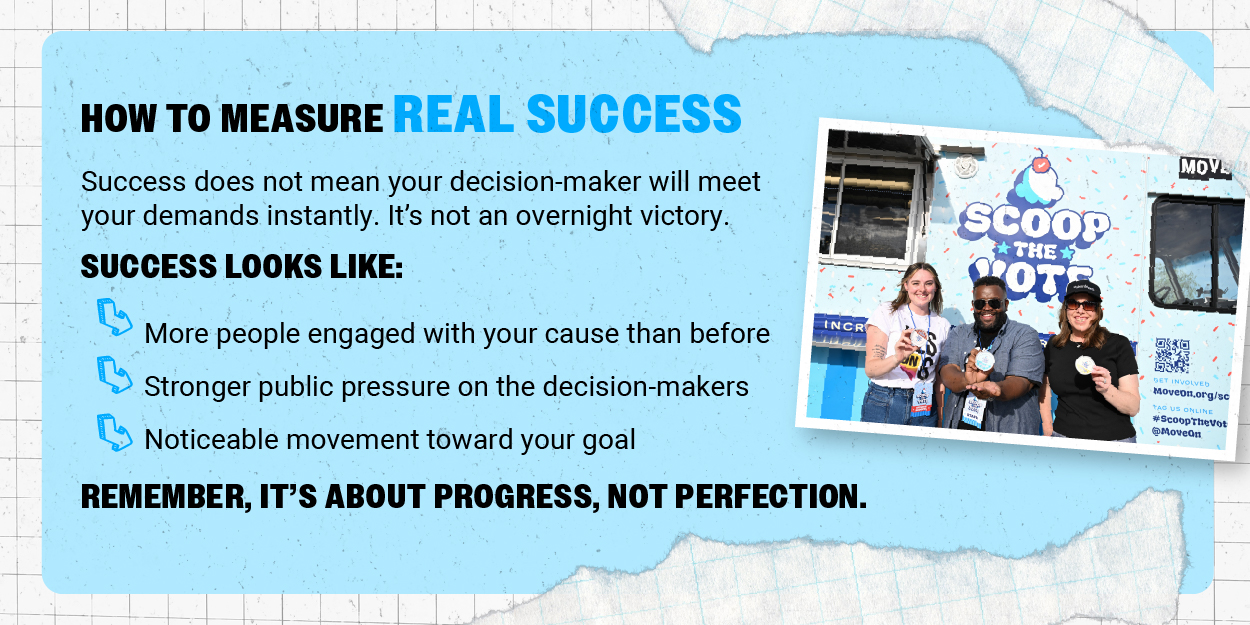
Success does not mean total victory overnight! Success means moving closer to your goals, growing your base, and generating reactions that build momentum. One-off activities can help build relationships and get eyes on your campaign, but sustained actions with legitimate follow-up steps are what shift power.
Bringing It All Together
Effective actions are intentional, targeted, and connected to larger, overarching campaigns. They help build momentum and grow your base. They make people want to get involved and fight for the long term.
Now it’s time to reflect on your own work and ideas—are you organizing activities or actions?