
This blog is part of a larger series, “Organizing 101: Outrage to Organizing”
We just learned all about organizing—what it is, how to be effective, and the lasting change organizing can accomplish for our country.
Petitions are more than just a collection of signatures; they can start movements. In this blog, we’ll demystify how petitions can be used as tools to build momentum and power.
Petitions Are a Mobilizing Tool
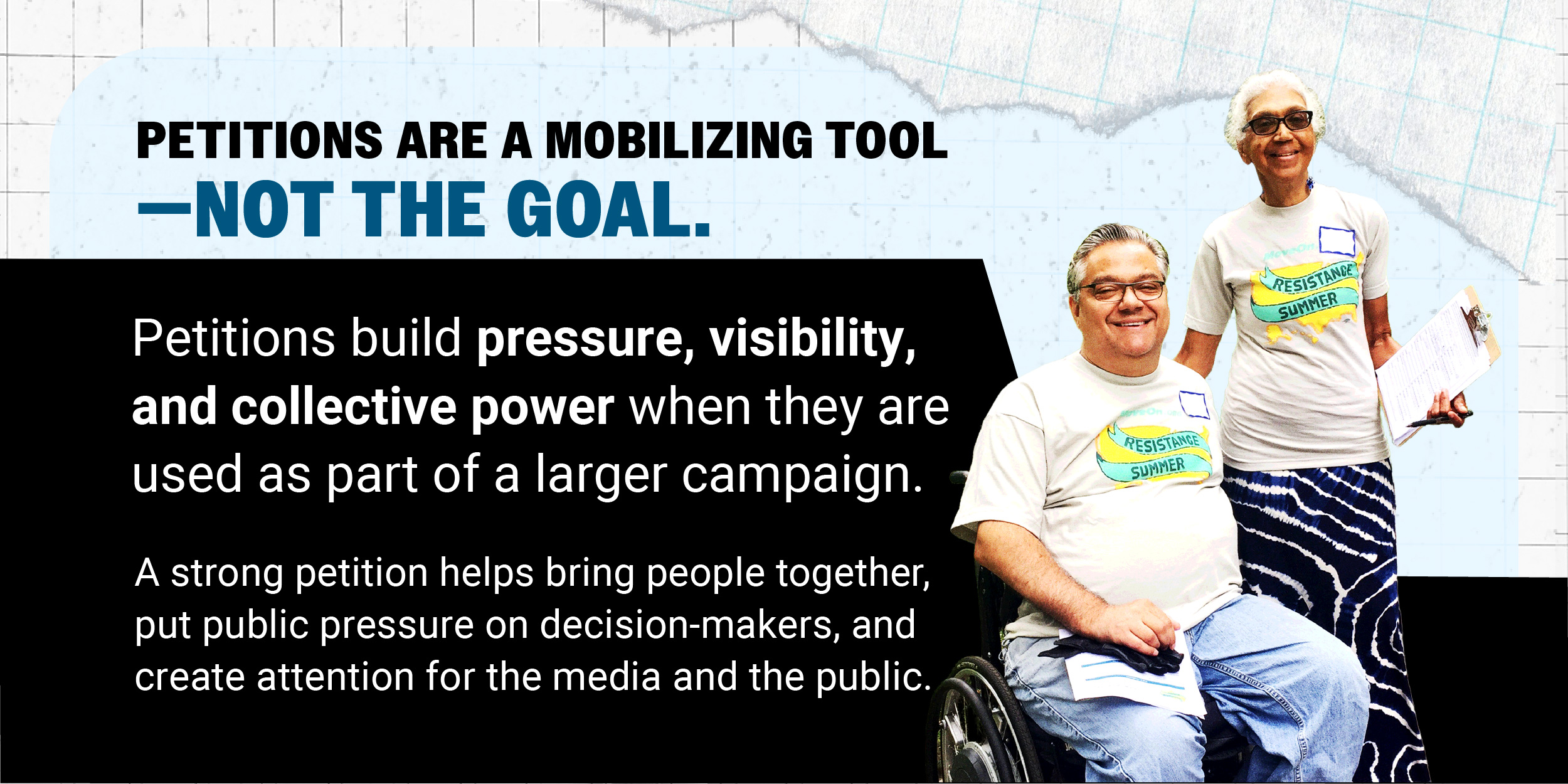
There is truly power in numbers, and petitions demonstrate the collective support driving a petition forward. But petitions are more than signature counts—they create attention and momentum for media, supporters, and decision-makers. When creating or amplifying a petition, you want to get it in the hands of those who can help its impact spread even wider.
Momentum occurs when the issue your petition is advocating for or against, and the signatures themselves, create sustained excitement, engagement, and visibility that pushes the campaign forward. Strong petitions meet at the intersection of relevance, timing, and action.
There is truly power in numbers, and petitions demonstrate the collective support driving a petition forward.
The Key Ingredients of an Effective Petition
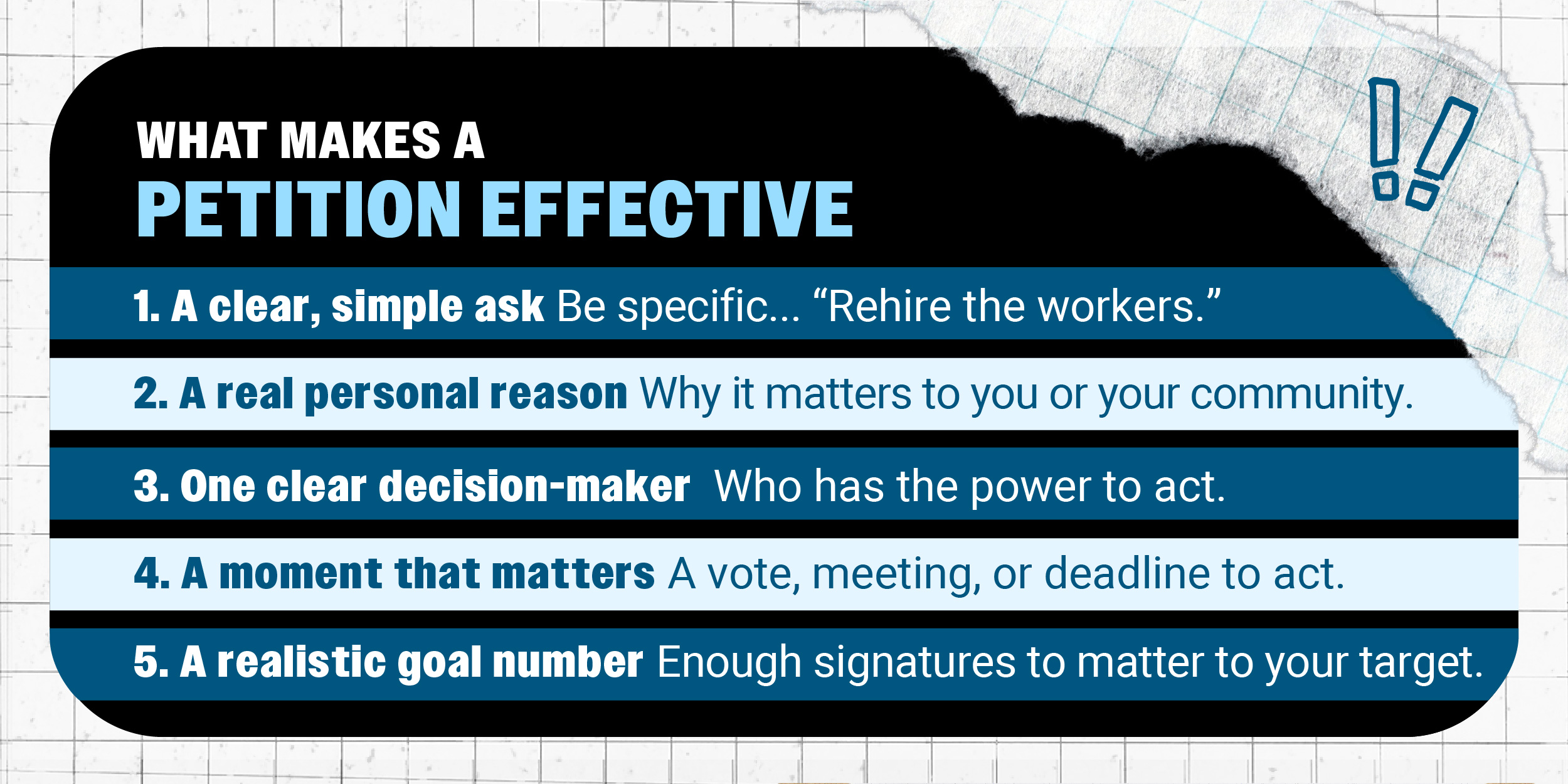
Petitions can be impactful, no matter the size, but an effective petition will contain these core components:
- Simple, clear ask → direct and easy for supporters to understand and act on
- Personal stake or values → grounded in lived experiences
- Clear decision-maker → Petitions should point to someone with the power to act.
- Timeliness → tied to current events, relevant moments, or upcoming deadlines
- Relevant goal size → Success isn’t about millions of signatures; it’s about having enough to be meaningful to the decision-maker.
The Three Key Audiences You Want to Engage With Your Petition
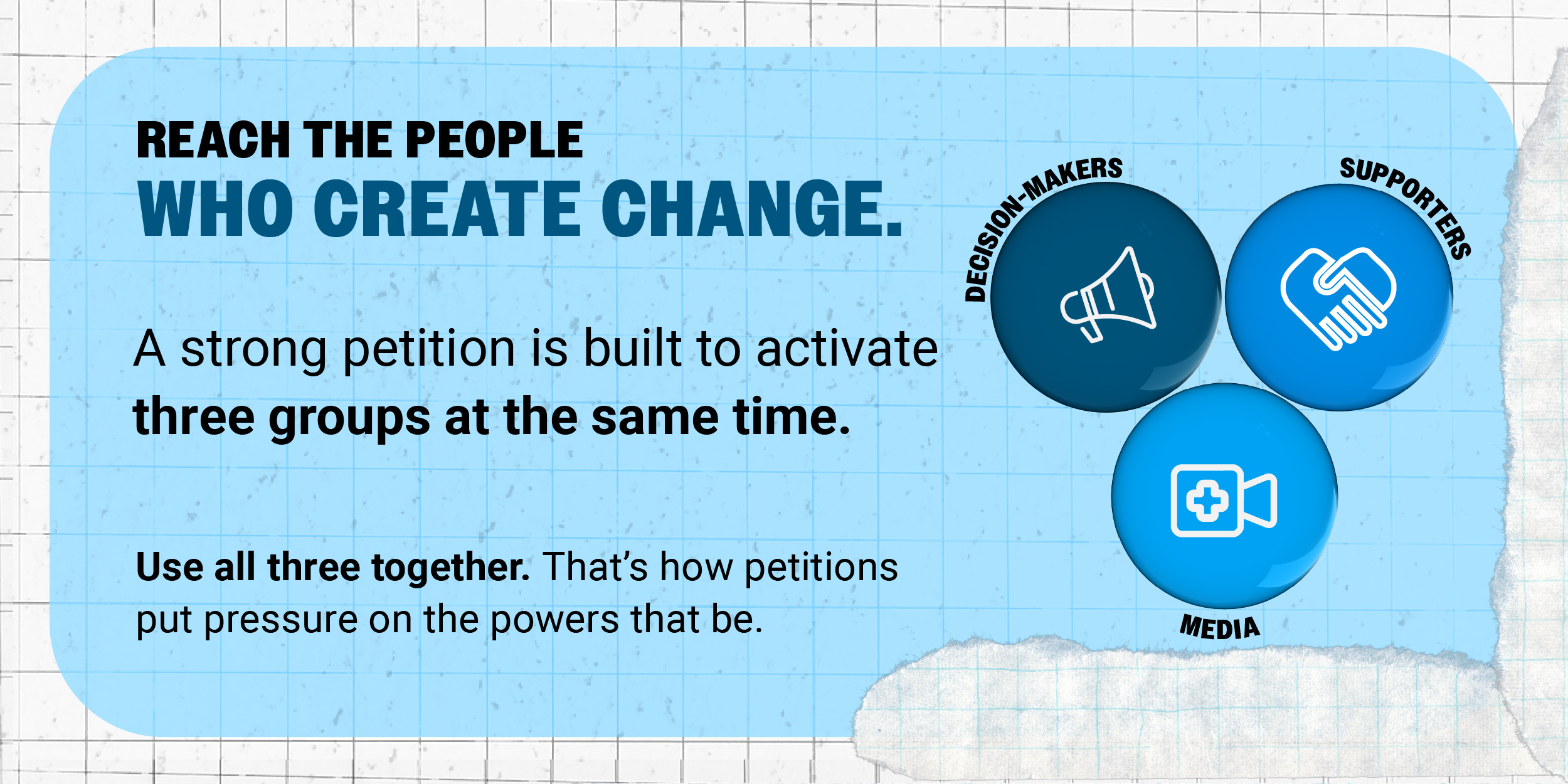
Along with your petition being specific, actionable, timely, and relevant, it needs to be directed toward those whose support will actually take action and give it the most momentum.
These are the three groups of people you want to pay attention to your petition:
- Decision-makers
-
- People with power to change policy or practice
- Engage them directly (petition deliveries, calls, emails, statements).
- Get creative to make sure your decision-maker notices your petition. Strategically placed posters, social media takeovers, and in-person actions can make your petition impossible to ignore.
- Signers/Supporters
-
- Share your petition—online and in person—in places where people who care about your issue gather.
- Once they sign, keep them engaged with updates, opportunities to share with their community, and reportbacks.
- Take it a step further. Ask signers to share the petition, call decision-makers, join deliveries, or share social media posts.
- Remind them their signature is part of a bigger story. While it can sometimes feel small, no effort is too little when it comes to making lasting positive change.
- Media
-
- The media can be an important part of your petition process because they can amplify your story to broader audiences and put pressure on decision-makers.
- The media can help you tell the story of your petition campaign. Develop a relationship with outlets and talk with them regularly. Reach out to reporters individually and pitch them directly.
- Press releases, letters to the editor, or op-eds that include your personal story, along with any quotes from signers and the petition signature count, can help get the attention of local media.
- If you’re planning in-person actions or petition deliveries, make sure you consider how you will engage press and what visuals you will have for them. The story you tell about your action and impact matters!
Real-World Examples of Petitions Driving Attention
- Tamir Rice Case (2017–2018)
- Petition delivery: 170,000+ signatures demanding the officer not be rehired.
- Press + family’s voice + physical delivery created momentum and visibility.
- Learn more about the petition here.
- Rename Trump Tower Street After Obama (2019)
- 300,000+ signatures
- Quirky, media-friendly framing → picked up by CBS News without heavy pitching
- Lesson: Humor and timeliness can drive organic press.
- Learn more about the petition here.
- Cyntoia Brown Case (2020)
- 600,000+ signatures, coordinated with the legal team
- Sustained pressure and media coverage contributed to eventual release.
- “Let Sha’Carri Run” Petition (2021)
- Nearly 600,000 signatures
- Coordinated petition delivery included a symbolic run in Colorado Springs with local track teams.
- Engaged media, decision-makers, and grassroots supporters simultaneously.
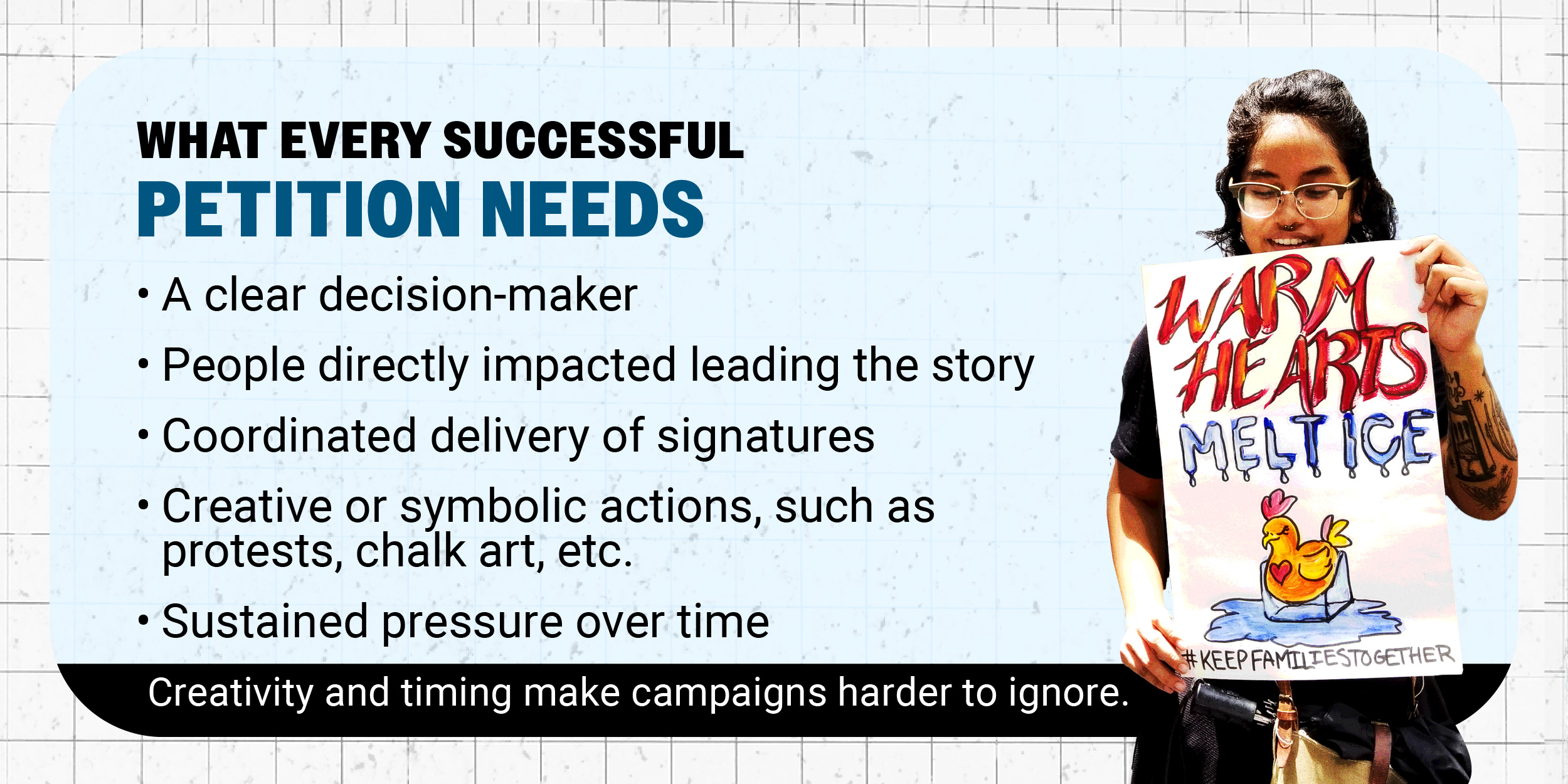
- Lesson: Creativity + symbolism make a campaign harder to ignore.
- Learn more about the petition here.
- LA Dodgers Petition (2024)
- Member-led petition with over 28,500 signatures
- Coordinated petition delivery with members to Dodgers Stadium
- Engaged media and decision-makers with multiple press hits and California State Senator Lena Gonzalez reaching out to the Dodgers’ owner
- Learn more about the petition here.
-
- “Reinstate Jimmy Kimmel and Protect Free Speech” Petition (2025)
- 231,655 signatures
- Engaged media and grassroots supporters by having a mobile billboard drive around Disney, Prospect Studios, and the El Capitan Theatre
- Learn more about the petition here.
Petitions as Part of the Campaign Arc
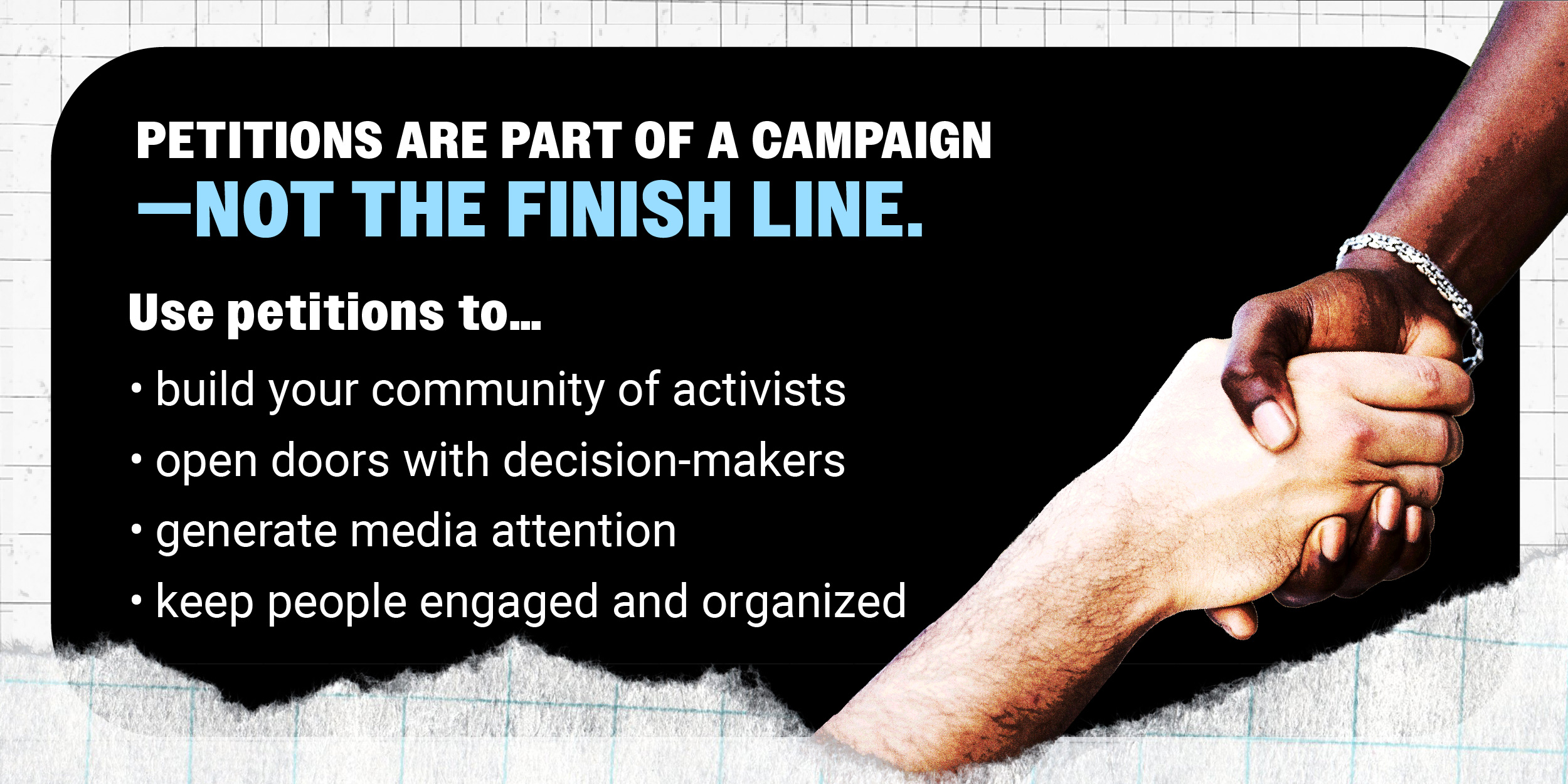
While petitions can hold a lot of power, petitions aren’t the end goal—they’re tools within the broader cycle of organizing.
Use petitions to:
- Build a base: Remember, a base is the group of people who share your values and will sign, engage, and actively help you fight for positive change.
- Engage decision-makers: One of the goals of your petition is to get it in front of a decision-maker to show them your idea has the power of the people driving it forward. Deliver your petition to key stakeholders and then follow up with letters, calls, and actions.
- Generate media attention: Contextualize your petition so people can see why it’s important and how it’s actionable. This will lead to more support and more signers, making it more media worthy.
- Sustain supporter engagement: The more you can update your base and supporters on the progress of your campaign, the more likely they are to stay engaged with you throughout.
Effective leaders use petitions strategically to build lasting momentum. They don’t just create a petition as a one-time, one-action initiative.
Key Lessons for Aspiring Petition Starters
- Ground campaigns in your lived experience and values.
- Use petitions to mobilize supporters, pressure decision-makers, and attract media.
- Engage all three audiences (decision-makers, signers/supporters, and media) for maximum impact.
- Elevate even small campaigns into local and national conversations by using creativity and storytelling.
Remember: Petitions Can Create Power
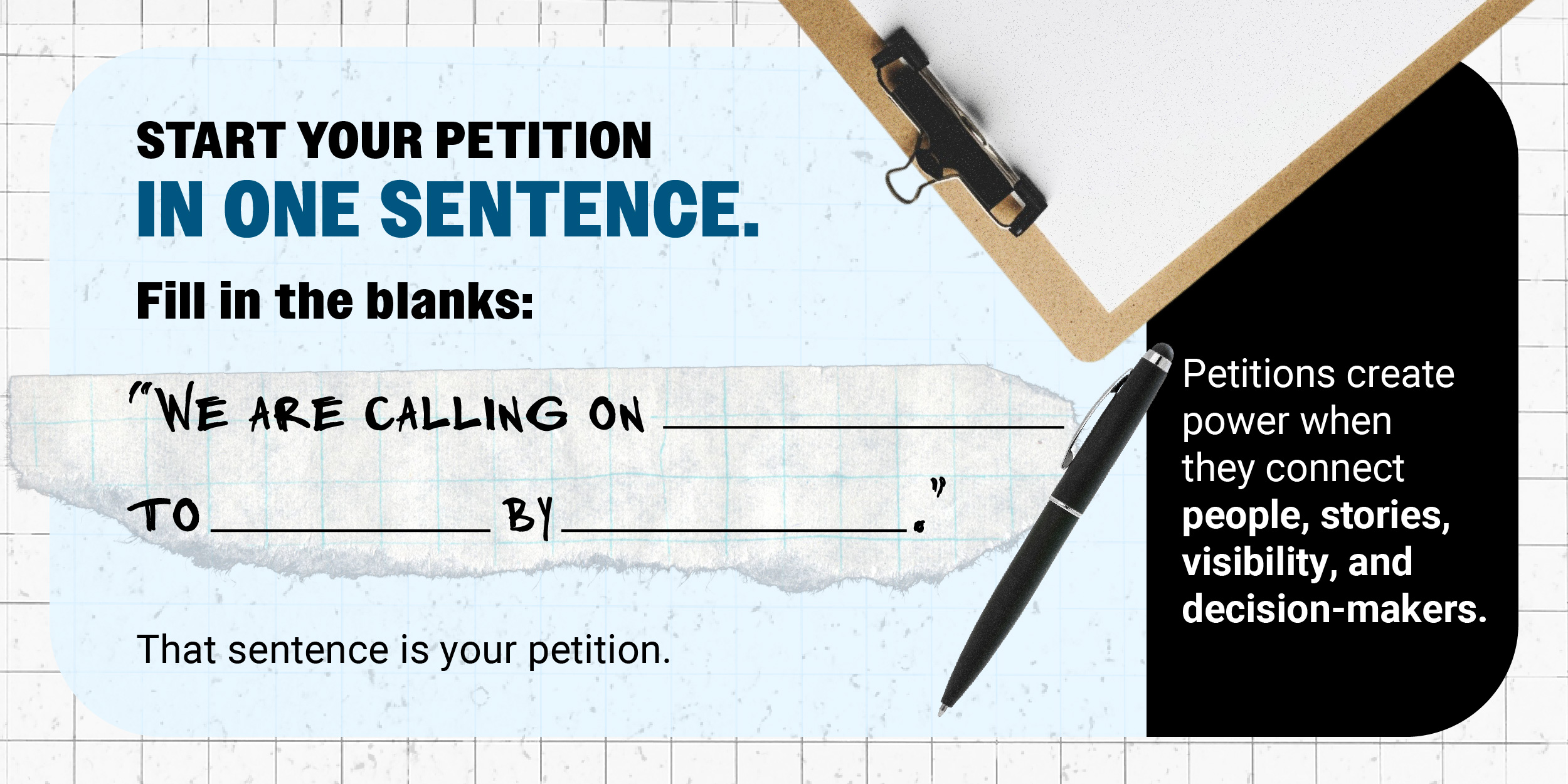
By connecting values, supporters, media, and decision-makers, everyday people can use petitions to spark real change.
Next step in the series: turning momentum into actions that shift power.