
Next: How to Start and Amplify Petitions to Spark Change >
Introduction to Organizing
Are you the one to gather the friends for a movie night? A birthday dinner? Or even a volunteering event? That’s organizing. If you enjoy getting your friends, families, or coworkers together and you feel impassioned to make a difference in your community, we will walk you through how to use those skills to become a leader and activist within your community.
What is organizing?
Grassroots organizing is connecting people to a shared goal and strategy to build collective power. Power isn’t inherently good or bad—it’s simply the ability to achieve a purpose.
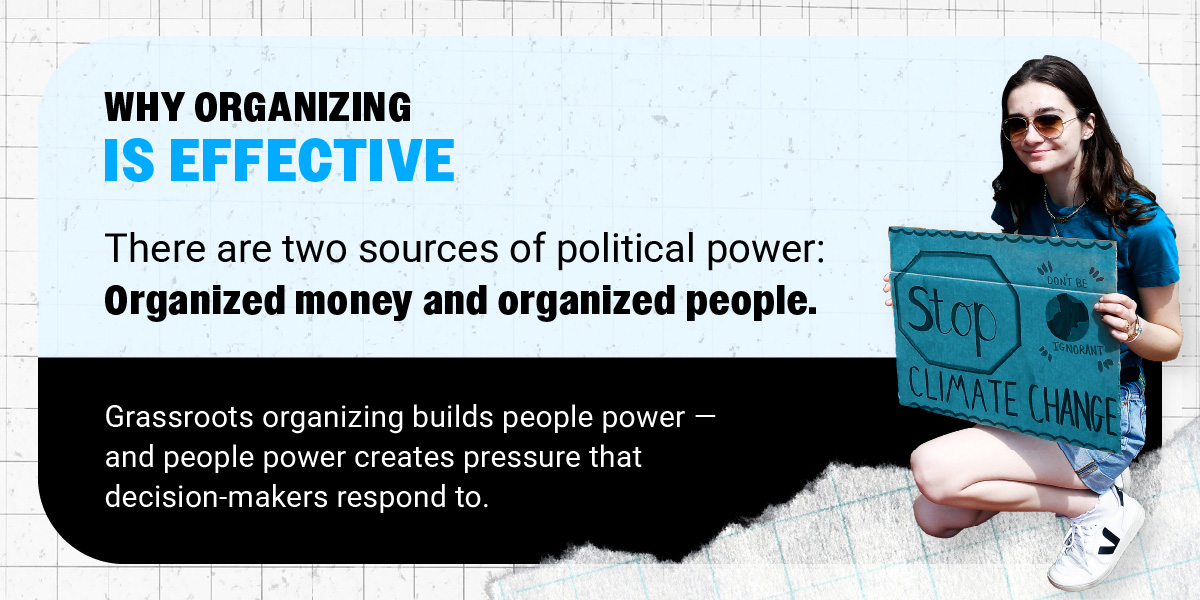
There are two main sources of political power: organized people and organized money.
Grassroots organizing focuses on people power at its core. It believes the power of a few can impact and positively influence the power of many. Every movement started out with individuals trying to make change and organizing people in their community.
The Cycle of Organizing
Organizing is ongoing. It doesn’t start and stop at one event or one issue. It’s OK for every event to look and feel different. There’s no cookie-cutter plan for organizing. The important thing is to continue it.
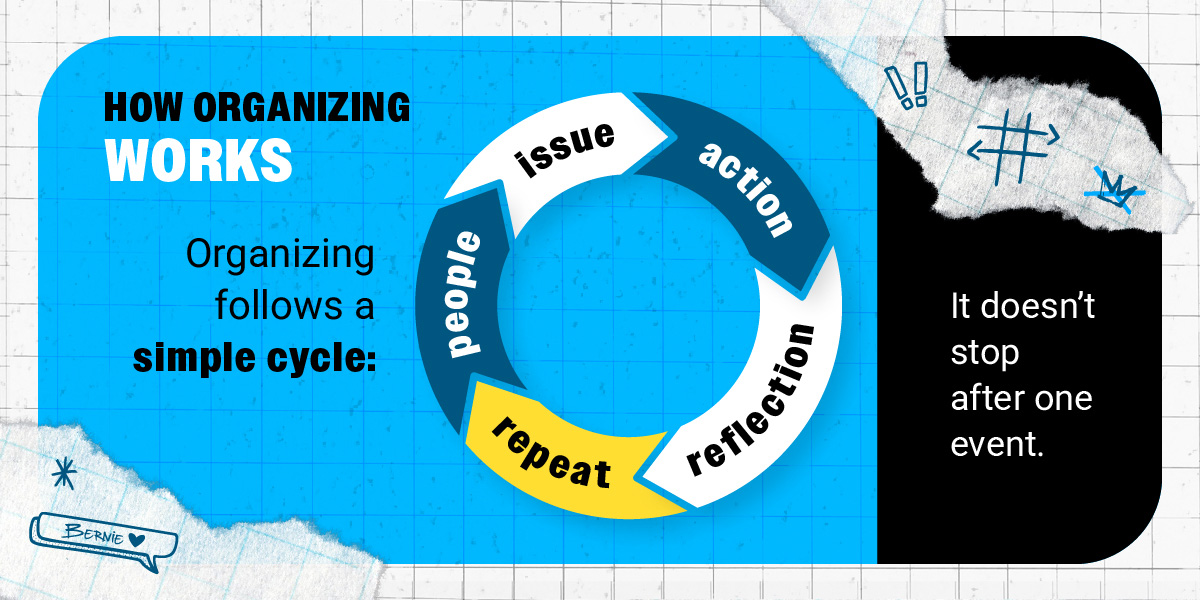
The Steps of Organizing:
- Base building – You’ll start by identifying and gathering supporters. Is there a group that you think you’d like to engage with? Maybe it’s friends or family members, coworkers or people in your run club.
- Choosing an issue – Next, you’ll narrow down problems into actionable issues. There are a lot of big, important topics to tackle in our world, but we need to make sure that there are actionable steps we can take that help the cause we’ve chosen.
- Research – When organizing, you may get a lot of questions about the issue area you’re involving others around. You don’t need to be an expert, but researching and listening to others around the same cause, as well as to your opponents, will help you further contextualize your passion area and connect you with others.
- Taking action – It’s time to take your research, base building, and issue to the streets. You can protest outside of federal buildings, on busy streets, at free speech areas on college campuses. You can lobby political incumbents, candidates, and policymakers. You can create campaigns about your issue on social media, YouTube, over email, phone calls, or texting.
Evaluation – After each organizing event, whether it be in person or virtual, it’s important to bring your group together and reflect on the successes, the roadblocks, and the areas for improvement for future events and campaigns. Knowing the wins and losses of your efforts will help you continue to work out the kinks and repeat the efficiencies moving forward.
What is “Issue Slicing”? Make your issue area stand out.
Now that we’ve given the overview and steps to organizing, let’s discuss how to go from a problem area to actionable steps that make change.
A problem can be a widespread, systematic issue, such as racism, poverty, or our broken health care system. Organizing based on a problem alone can feel too big, overwhelming, and paralyzing.
Issues are smaller, specific, and actionable, such as wanting to reduce inflated police budgets or lowering prescription drug costs. Organizing a campaign, protest, or lobbying excursion can greatly impact the larger problem you’re trying to solve through specific planned actions.
Think of organizing like baking cookies or cutting pizza: Slice big problems into manageable pieces to create meaningful wins.
How to Set Effective Organizing Goals
To be effective when organizing, your goals need to be specific, actionable, and community driven. When goals are vague, charity focused, or disconnected from community needs, it makes your purpose less impactful and can alienate those who would normally work with you. For example, lobbying for public restrooms is an effective organizing goal and strategy; handing out personal hygiene products can help but is not a long-term, effective tactic.
Remember this: Strong goals require policy change and cultural shifts. Policy change can be as simple as getting your local government to have an additional budget earmarked for education in your town, or it can be as big as pushing for a bill at the federal level.
Building People Power
People power is at the center of all movements and substantial political change. When starting your organizing journey, you’ll need to find a base. A base refers to a group of organized people with shared self-interests, issues, and strategies for change.
To have people power, you need to have a base.
There are a few ways you can build a base:
- You can talk to individuals one-on-one. This can be friends, family, acquaintances, or people on the street.
- You can host a house party for your topic and spread the word via social media or word of mouth, or you can attend a house party for another topic and meet people there to form your own base.
- Social media is a powerful tool that can be harnessed to create awareness which can lead to real change. You don’t have to create sophisticated graphics or videos to get your message across and reach people. Authentic stories and voices are the most impactful.
Remember, people join and stay involved through …
- issues they care about,
- relationships with others in the movement, and
strategy they believe will make a difference.
Why Relationships & Strategy Matter When Organizing. Just like having a work bestie to make the days more fun and productive, relationships are what sustain us through difficult, long-term work.
Getting involved in the progressive movement is filled with success, setbacks, and emotions. You are fighting for an equitable, just world where everyone can thrive. You’ll be watching and seeing policies come to be that aim to oppress certain groups and take away peoples’ rights. It’s heavy and a long fight. It’s imperative that you build relationships with others and encourage your base to do the same. It takes all of us to make a movement.
Good organizing strategies are inclusive, intersectional, and accessible to people with different identities and capacities.
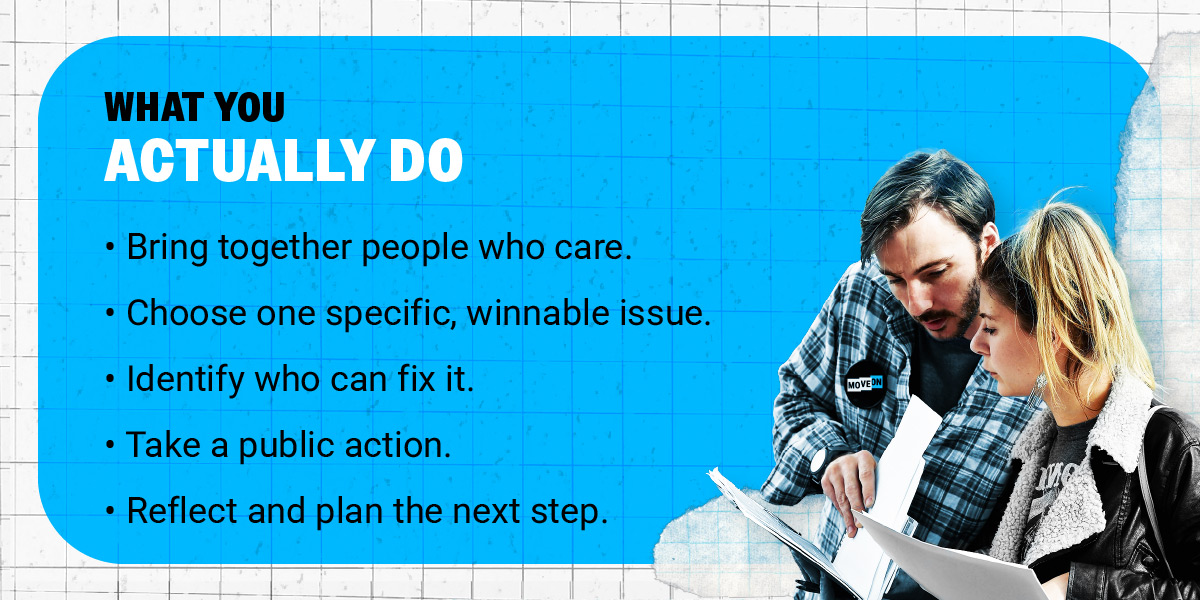
Key Takeaways for Building People Power
Activism and organizing others to achieve a common goal is no small feat. Everything you do has the chance to make a difference for your community.
- Slice big problems into specific issues to make change possible.
- Effective organizing goals must be specific, policy oriented, and collective.
- Organizing thrives on people power, built through relationships and shared strategy.
- Success comes from ongoing cycles of action and reflection, not one-off events.
Stay tuned for our next blog in the How to Be a Leader series about building community through relationships.