
This is part of a larger series “Organizing 101: Outrage to Organizing”
One-on-one conversations are the backbone of organizing. They are how we build trust, uncover motivation, and move people from interest to leadership. This blog walks through who to meet with, when and where to do it, and how to structure conversations that actually move people to action.
Who to Have One-on-One Conversations With
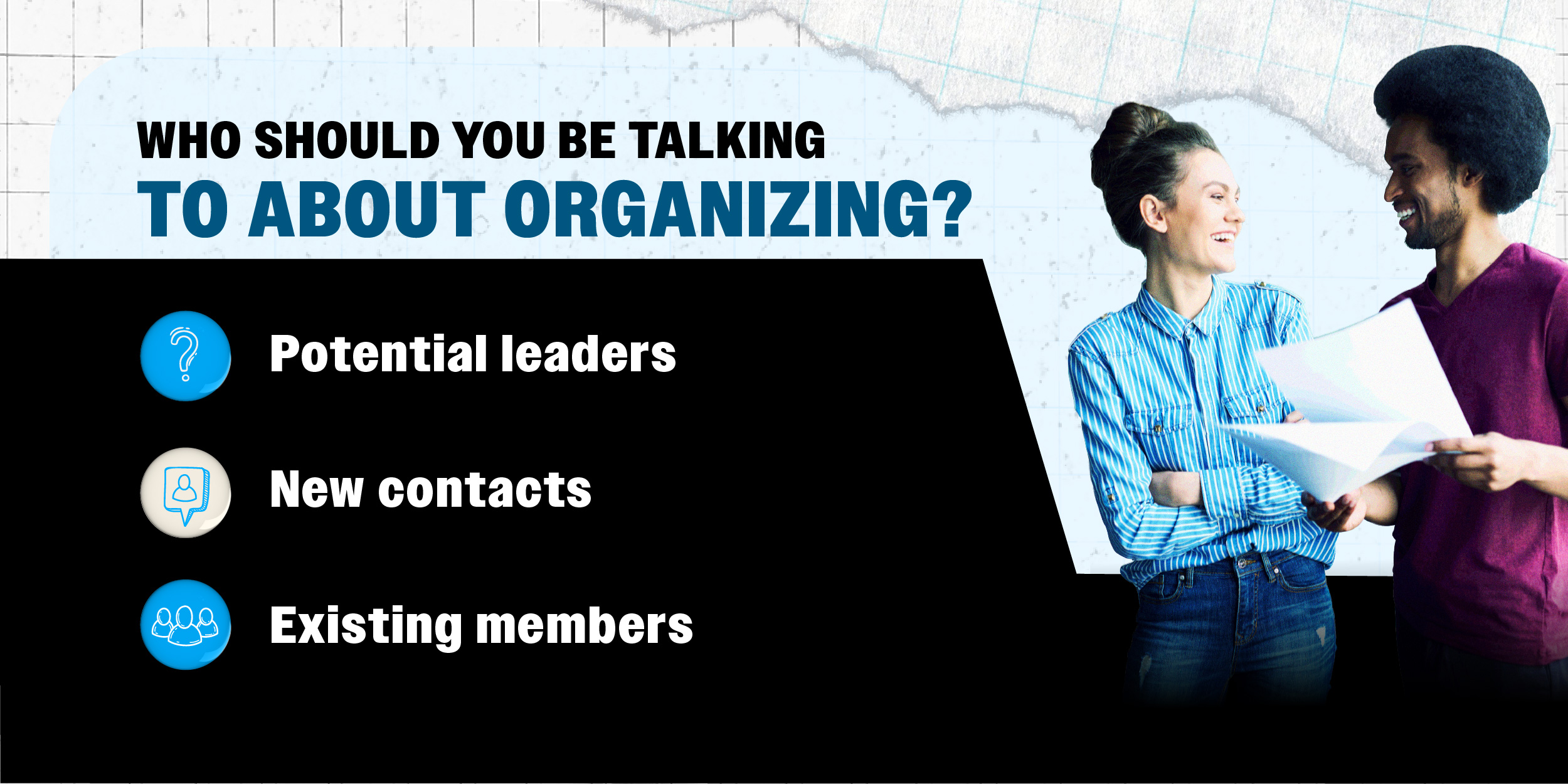
Potential leaders: These are people who’ve taken action before, such as signing a petition, attending a rally, donating money or volunteering.
New contacts: These are folks who have expressed interest but haven’t really engaged deeply.
Existing members: These are people in your base who you want to deepen relationships with so they stay engaged.
The goal of these conversations is to move people from being supporters to being leaders.
When to Have One-on-One Conversations
Conversations about organizing are easier when you can harness someone’s existing energy. As soon as someone shows interest or curiosity, follow up within 24–48 hours while momentum is fresh.
Slower moments are inevitable. High energy isn’t sustainable 24/7, so in these slower moments, use these chats for maintenance: keeping your core team energized and connected.
It’s easier to ride the momentum, so talking with and engaging individuals before or after big actions and/or campaigns can be an opportunity to process experiences and keep people moving forward.
Where to have one-on-one conversations with your potential leaders, new contacts, or existing members
These are conversations about passion and action. When choosing where to engage with individuals about what they want to change in their community and how/why they want to help, be intentional. Choose a spot that encourages openness and doesn’t rush the conversation, like coffee shops, parks, phone calls, or Zoom calls.
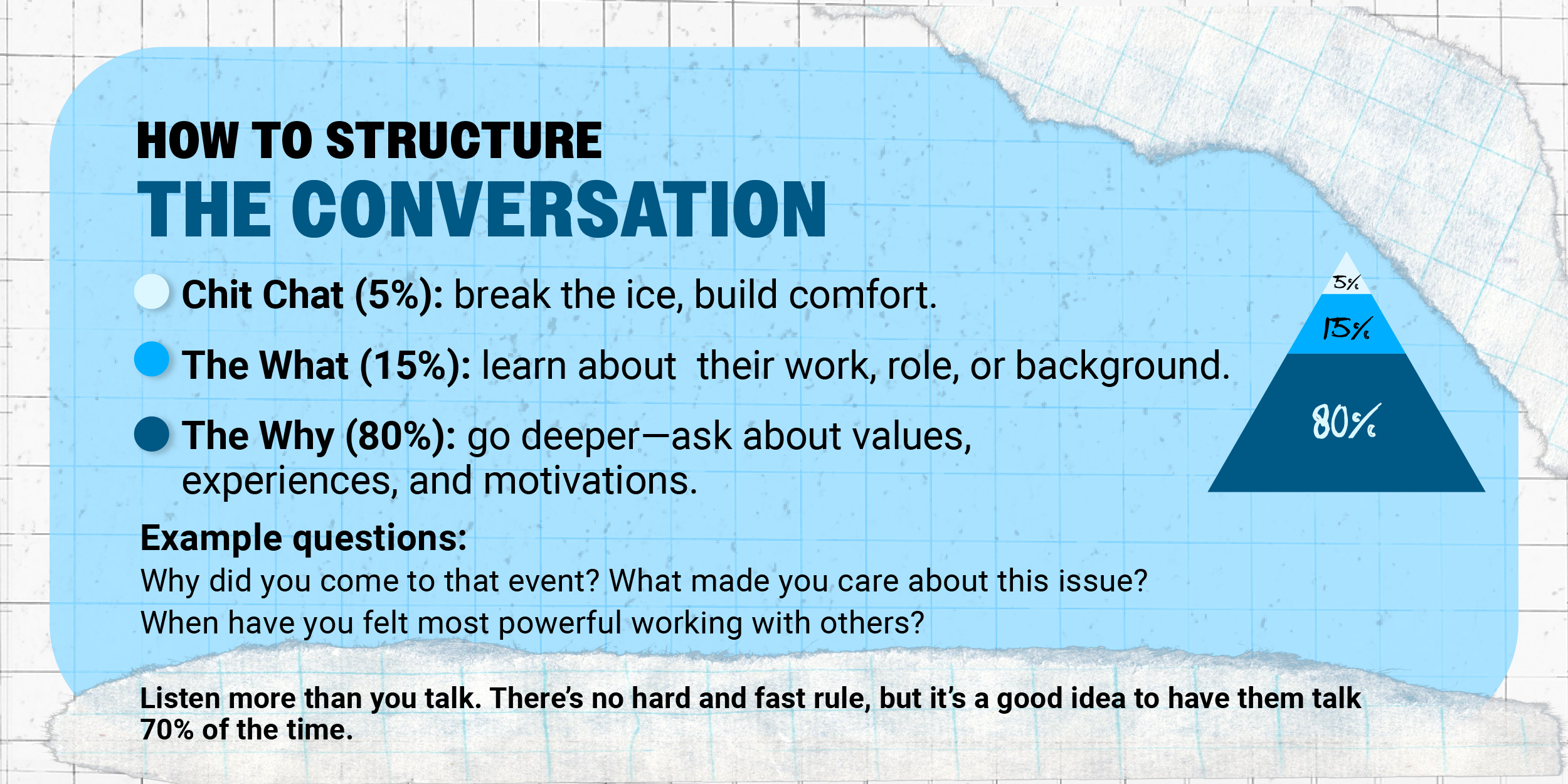
How to Structure the Conversation (Triangle Model)
- Chit Chat (5%): break the ice, build comfort.
- The What (15%): learn about their work, role, or background.
- The Why (80%): go deeper—ask about values, experiences, and motivations.
- Example questions:
- “Why did you come to that event?”
- “What made you care about this issue?”
- “When have you felt most powerful working with others?”
- “Why did you come to that event?”
- Example questions:
- Share your own story, too—relationships are two-way, not interrogations.
Keys to Having Meaningful One-on-One Conversations
Listen more than you talk. There’s no hard and fast rule, but it’s a good idea to have them talk 70% of the time.
Follow curiosity—if they say something powerful or interesting, ask why or tell me more.
Don’t worry about taking notes to jog your memory. You can take notes after (not during) —record key values, stories, and potential ways to engage them.
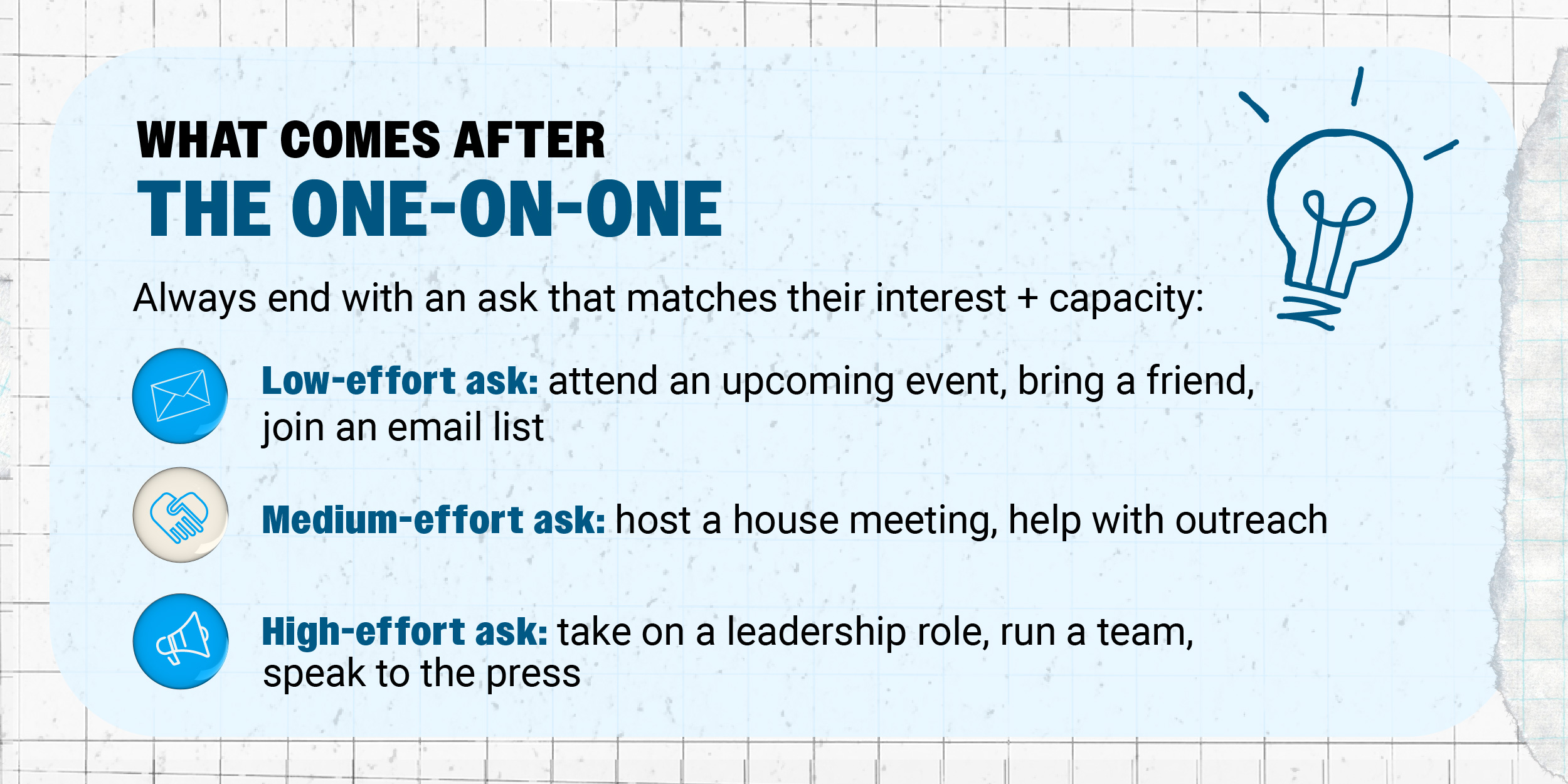
What Comes After the One-on-One
Always end with an ask that matches their interest + capacity:
- Low-effort ask: attend an upcoming event, bring a friend, join a list
- Medium-effort ask: host a house meeting, help with outreach
- High-effort ask: take on a leadership role, run a team, speak to the press
Because you’ve made a connection that is the start of something new and you’re also asking them to do something in return, follow up shortly after your call. It can be via text, phone call, email, or whatever works best for you both.
Why One-on-Ones Work
Think about the times you’ve had a really great conversation with someone—you walk away feeling energized, understood, and motivated. This is the reason one-on-ones work. They uncover what motivates people at their core. They build trust and commitment beyond transactional asks. They transform supporters into leaders who stay, not just participants who drift away. It all starts with a conversation, being curious, and following up.
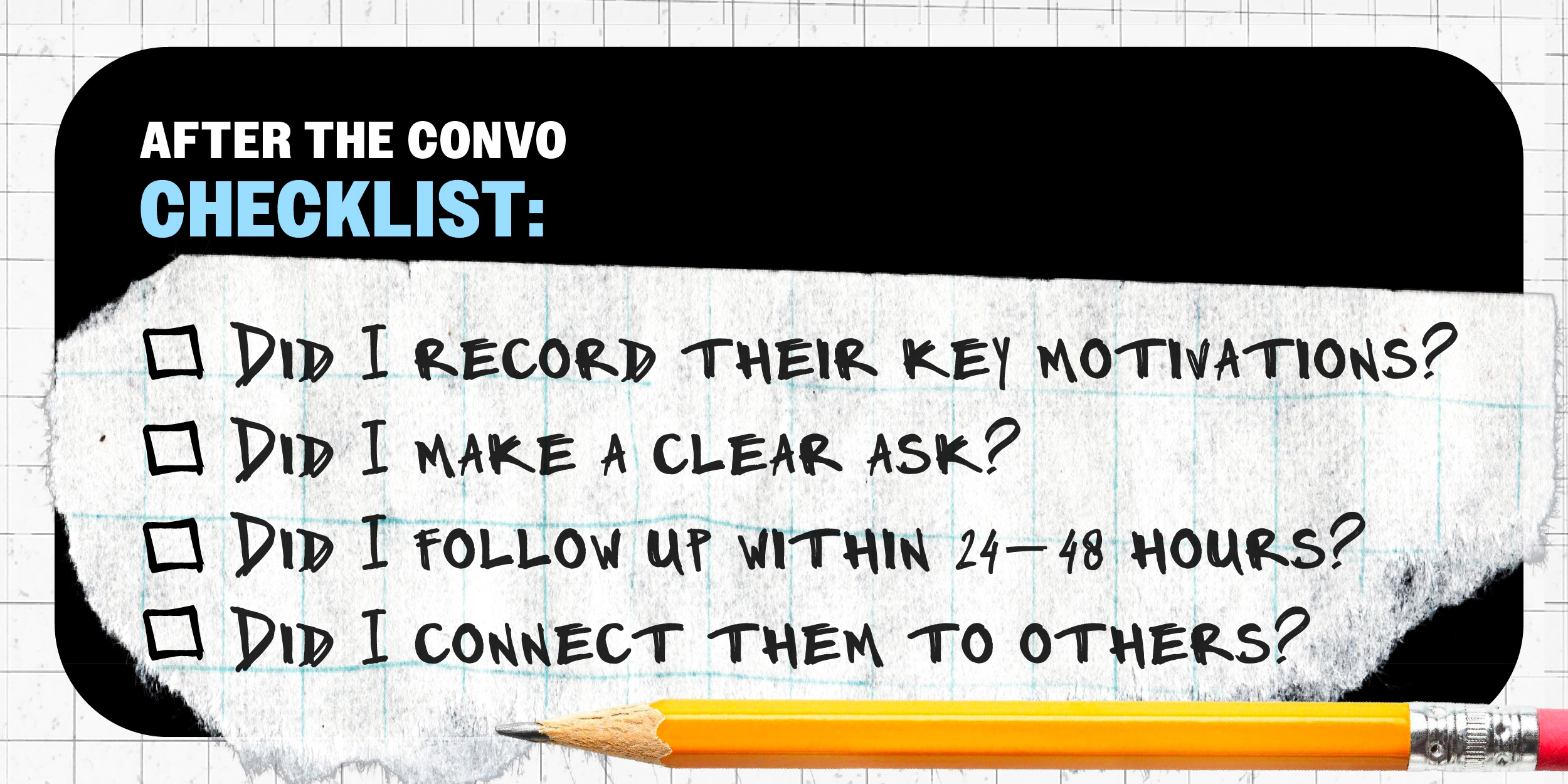
After the Convo Checklist:
- Did I record their key motivations?
- Did I make a clear ask?
- Did I follow up within 24-48 hours?
- Did I connect them to others?