
This blog is part of a larger series called “Organizing 101: Outrage to Organizing.”
What Is Canvassing?
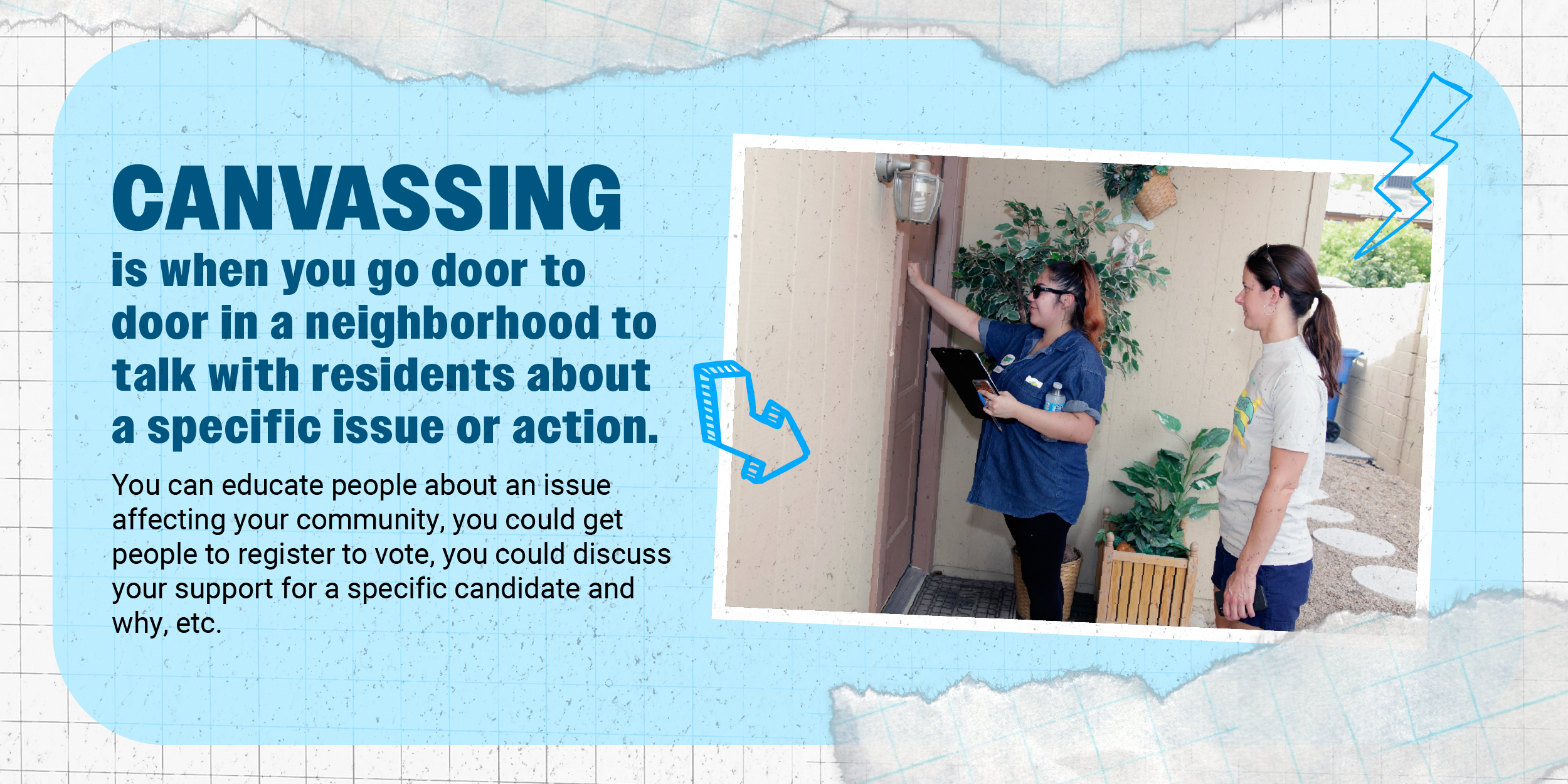
Canvassing is when you go door to door in a neighborhood to talk with residents about a specific issue or action. You can educate people about an issue affecting your community, you could get people to register to vote, you could discuss your support for a specific candidate and why, etc.
While you’re going door to door, try to take a few notes so you can look back on your day to go over what you learned, so you can build stronger scripts for future canvassing campaigns.
Canvassing is not just about persuading people to get involved—it’s about listening, learning, and building relationships.
Through connecting with others in person, you are raising awareness about an issue while identifying supporters and potential future volunteers. Your goal is to persuade undecided people and encourage civic participation, but you may find that you’re growing your base of supporters at the same time.
Why Canvassing Still Matters
Canvassing is a powerful organizing tool because it allows you to talk directly with people in your community about issues that matter. Throughout this series, we’ve talked about the importance of being vulnerable and sharing your story, and canvassing is another great avenue for you to talk with people directly about your experiences and theirs.
What you’ll learn in this blog:
- How to meet people where they are—literally at their door.
- How effective door-to-door outreach really is.
- How real conversations build trust, foster relationships, and amplify change.
What Makes Canvassing So Effective
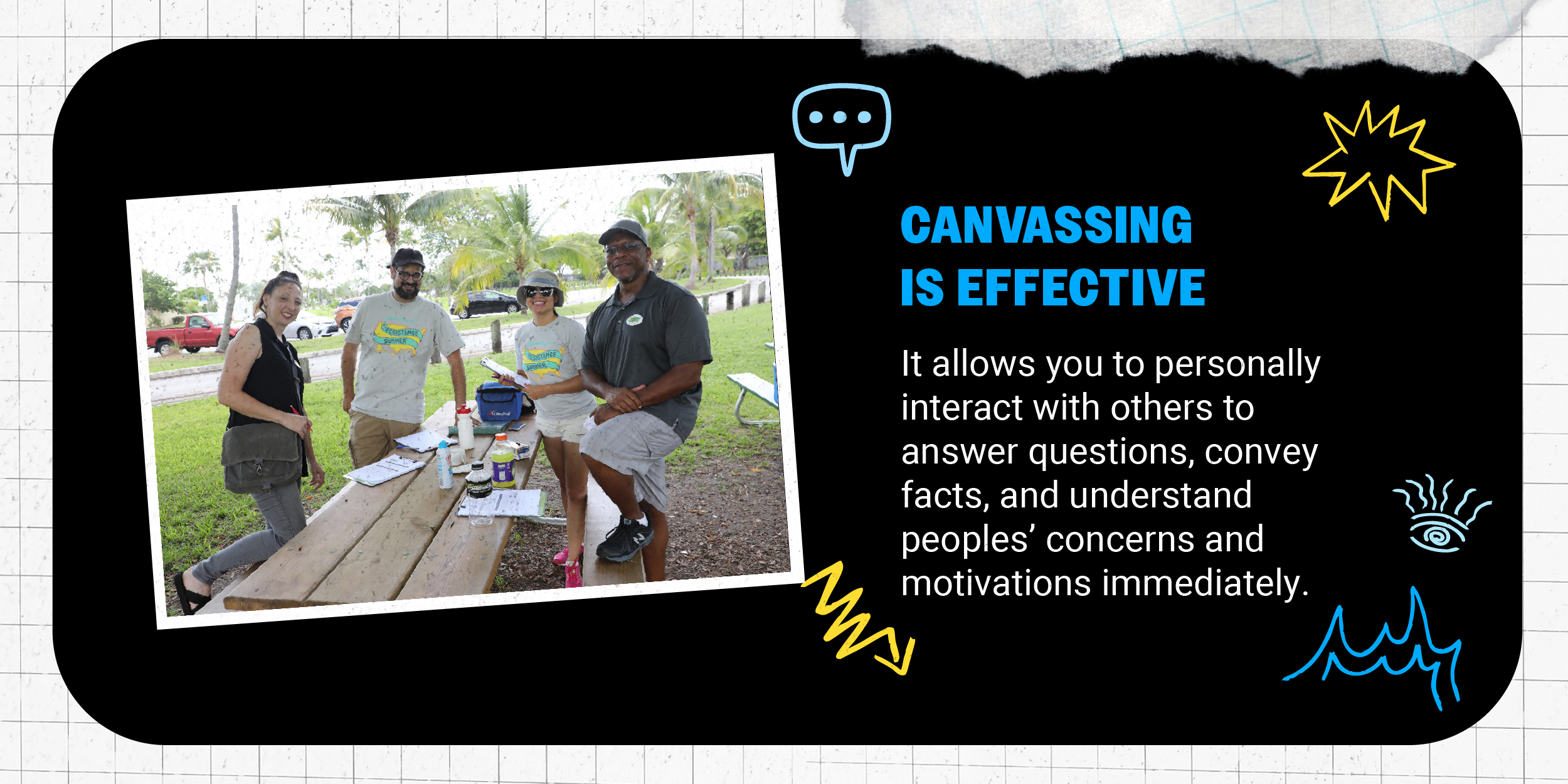
Whether it’s posting on social media or canvassing, we’ve discussed the importance of connecting with others. Canvassing is so effective because it allows you to personally interact with others to answer questions, convey facts, and understand peoples’ concerns and motivations immediately.
Canvassing actually makes more undecided voters head to the polls than other outreach methods. It also creates a feedback loop between organizers and communities, allowing organizers to better understand their community and how they can make a difference.
The role of canvassing in grassroots organizing
Canvassing Builds Community Power
Canvassing helps movements grow because it allows you to connect face to face with someone so you can understand their motivations, fears, and reasons behind why they are or aren’t getting involved in the issue, campaign, or candidate you’re organizing about.
The real reason canvassing is so effective is because when we realize that others share our concerns, our power grows. We become more likely to get involved and make a difference when we know we aren’t alone.
Canvassing allows you to ask people “What’s important to you in our community?” And you can adapt your current campaign and develop future campaigns from there.
If you see people you’re talking to are passionate and curious, ask them about their interest in getting involved.
Canvassing can help you find all of the following:
- Future volunteers
- Community leaders
- Event participants
- Petition signers
Finding passionate individuals through canvassing reinforces what allows movements to grow: developing people into leaders, not just supporters.
How to Prepare to Canvass
Set clear goals about what you want to accomplish with canvassing.
Before knocking on doors, organizers should answer the question: What do I want to accomplish by canvassing?
You could have the goal of:
- Identifying voters
- Persuading them to get involved in a certain topic, campaign, or election
- Recruiting volunteers
- Gathering petition signatures
- Inviting folks to events
Having a clear goal will make it easier for you to stay focused during the conversation if it goes off track, especially during topics that can be uncomfortable or incite fear.
How to Train Volunteers
Talking with a stranger face to face may seem intimidating, so it’s important to train your volunteers so they can feel confident to handle any situation.
Training should cover:
- Messaging and talking points: This will help volunteers stay on message even if the conversation strays off topic.
- Active listening skills: Make eye contact and use body language to let people know you’re listening.
- Handling difficult conversations: Conversations may turn heated or emotional, especially during unprecedented times. Make sure to stay calm and tell trainees to disengage if the conversation is leading nowhere.
- Recording data accurately: You want to record people’s information and if they’re going to do a follow-up action.
- Practicing safety and etiquette: Always prioritize your safety over everything else.
You can practice canvassing by role-playing the types of conversations you might have, reviewing scripts, and practicing answers to common questions.
Canvassing Must-Haves
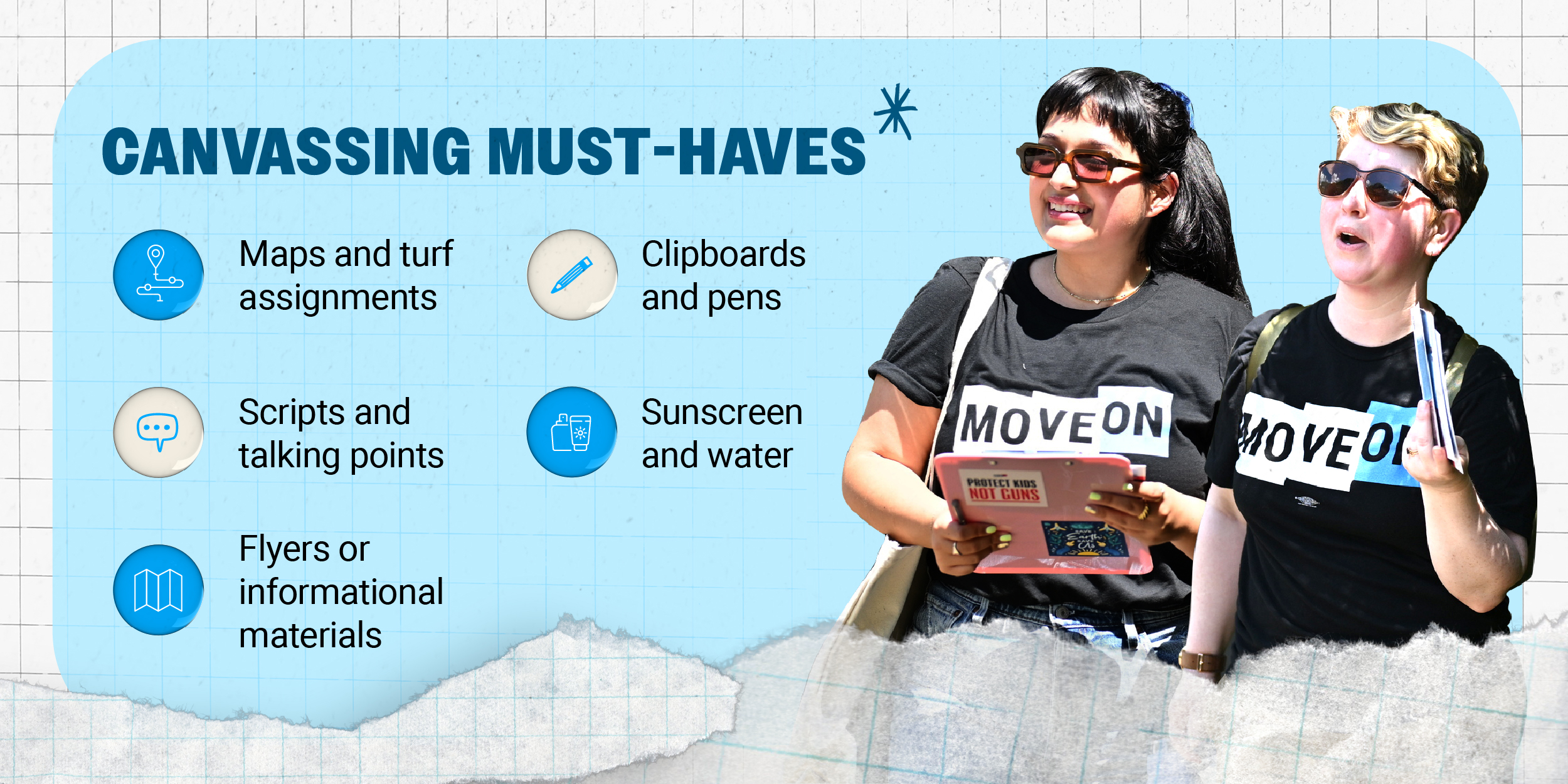
- Maps and turf assignments
- Scripts and talking points
- Flyers or informational materials
- Clipboards and pens
- Sunscreen and water
The anatomy of a good canvassing conversation
The introduction
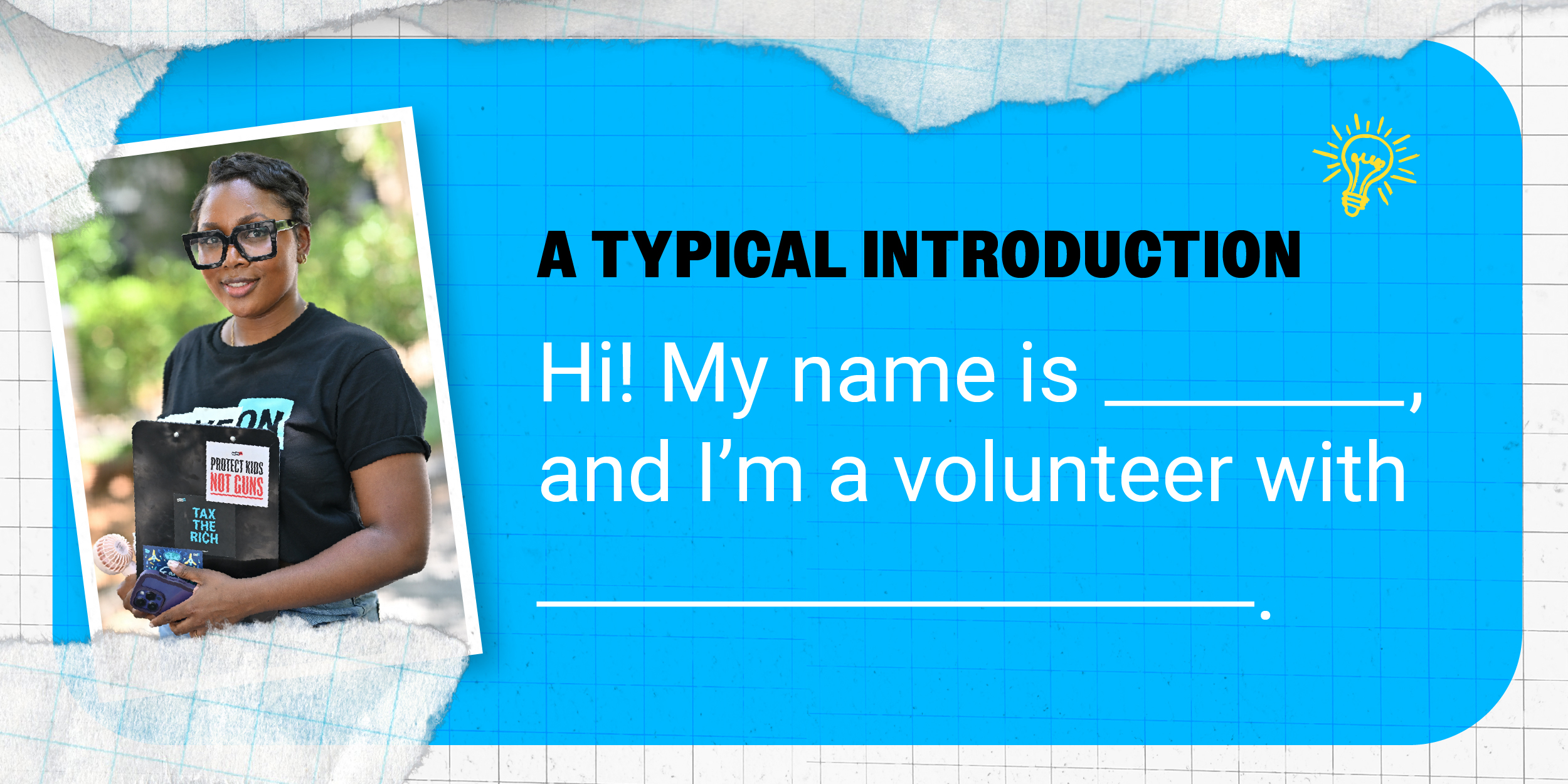
First impressions matter. A typical introduction includes:
Hi! My name is ___, and I’m a volunteer with ___.
Establish trust and openness quickly.
Ask Questions
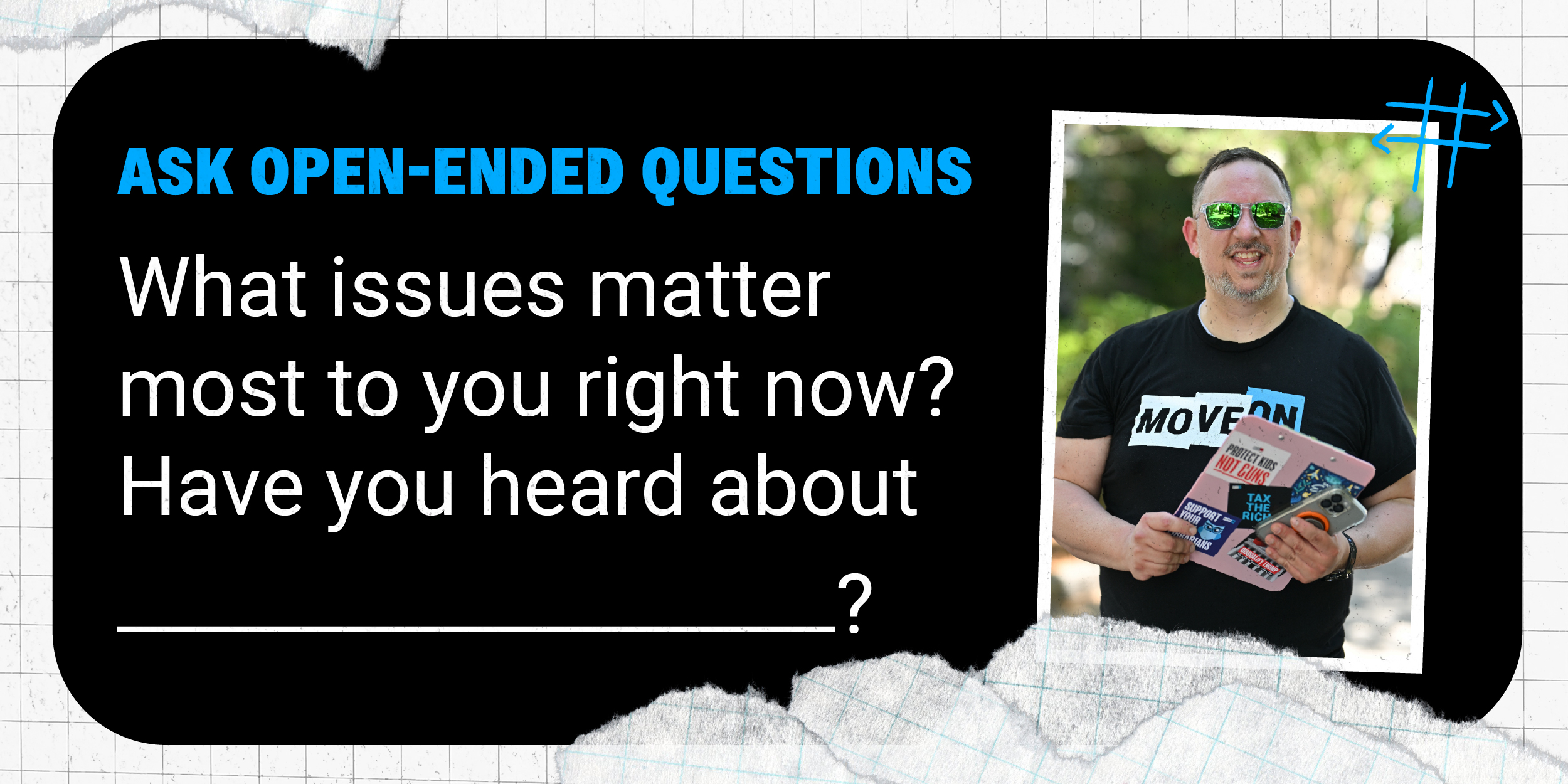
Effective canvassing prioritizes listening.
Ask a variety of question types:
- Open-ended questions
- Issue-based questions
- Experience-based questions
Open-ended and issue-based questions:
- What issues matter most to you right now?
- Have you heard about ___?
Answering questions and overall best communication practices
- Keep explanations short and clear.
- Focus on shared values.
- Avoid overwhelming people with statistics.
Every conversation should end with a clear next step.
You can ask your audience to:
- Sign a petition
- Attend an event
- Volunteer
- Vote
- Share information with neighbors
The goal of your canvassing conversation is to gauge interest, further the conversation, and give people an opportunity to act.
How To Go Beyond Scripts When Canvassing
By now, you’ve realized the power of sharing your story throughout every step of organizing. When you’re canvassing, you can share your own story to help others open up about their motivations and hesitations. By opening up and being vulnerable to others, you invite empathy and action.
Not every conversation is going to go to that deeper level. Always adapt to the person you’re talking with and never force them to open up if they don’t seem comfortable.
Best Practices for Effective Canvassing
Listen more than you speak
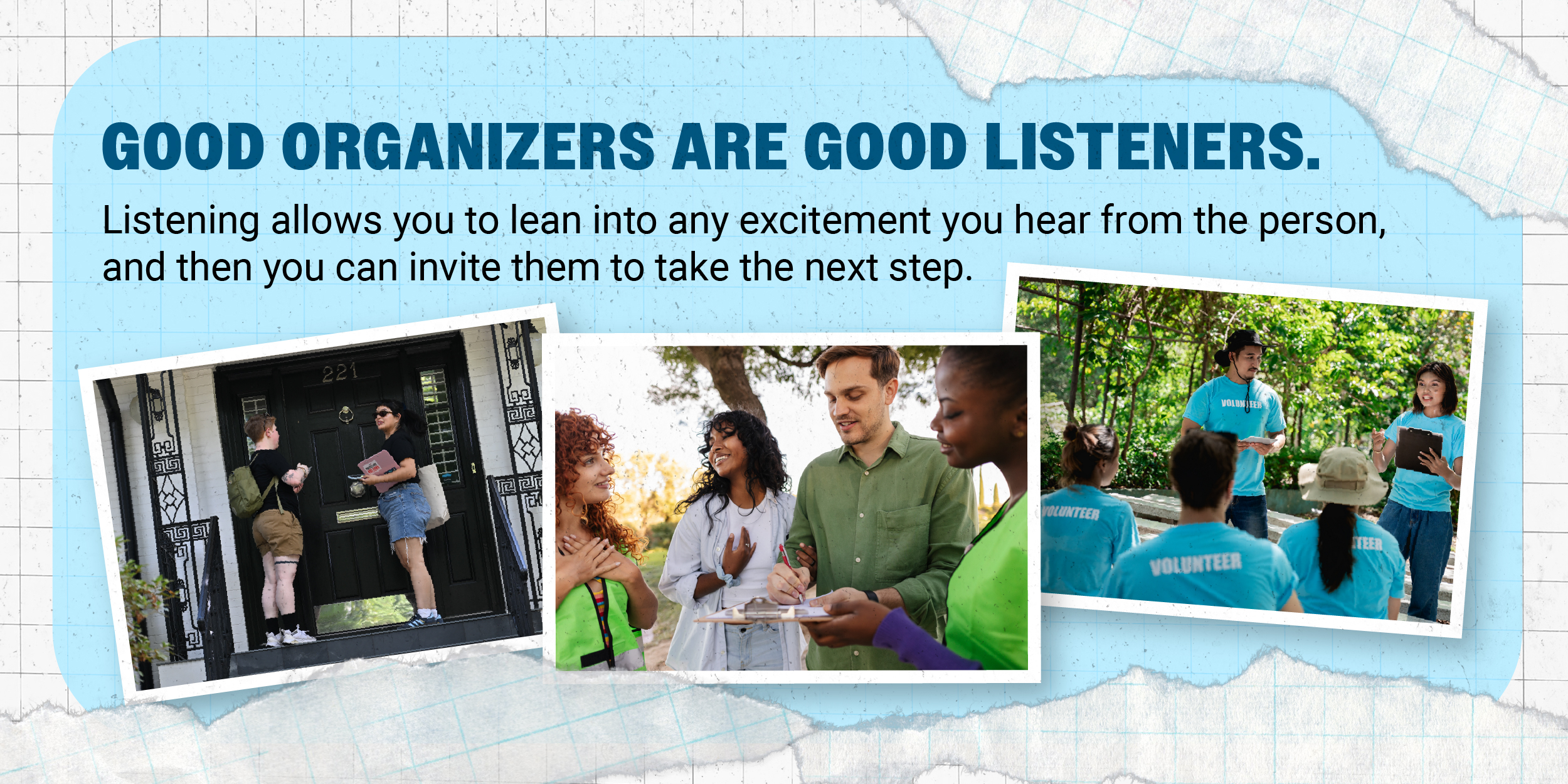
Good organizers are good listeners. Listening allows you to lean into any excitement you hear from the person, and then you can invite them to take the next step. You can also answer any questions you hear that address their hesitancies or obstacles.
Successful canvassing is based on respectful dialogue and trust-building. Adapt to your audience and, if they’re not interested, politely end the conversion and move on to the next house. Share things you’re comfortable with telling the other person but don’t expect every person to open up to you in the same way, and that’s OK. Don’t push anyone.
Record What You Learn to Help Build Your Campaign and Future Trainings
After each conversation, canvassers should take notes on each person’s …
- level of support,
- key concerns,
- volunteer interest, and
- follow-up needs.
Common challenges canvassers face
Rejection
Canvassers can expect some doors to close and some conversations to be short or disinterested. This is OK. It’s about quality over quantity.
How to stay safe when canvassing
- Canvass in pairs or teams.
- Respect “No Soliciting” signs.
- Stay aware of surroundings.
- Leave immediately if someone asks you to.
After the Canvass: How to Turn Conversations Into Action
Successful canvassing doesn’t end at the door.
Post-canvass steps
Go over your data and upload it or store it wherever your team stores files. Make sure to follow up with your supporters and invite them to get involved with specific actions. Always send a thank-you message to them for taking the time to chat with you. Following up with folks is the start to creating a long-term organizing relationship with them.
How Canvassing Builds Movements
Canvassing helps build movements by allowing you to grow your membership and understand communities on a personal level. The more people you know who can volunteer, sign a petition, vote for a progressive candidate, or become a leader, the stronger and more powerful the movement becomes. Every conversation you have with someone contributes to a larger collective effort.
Organizing Starts With A Conversation
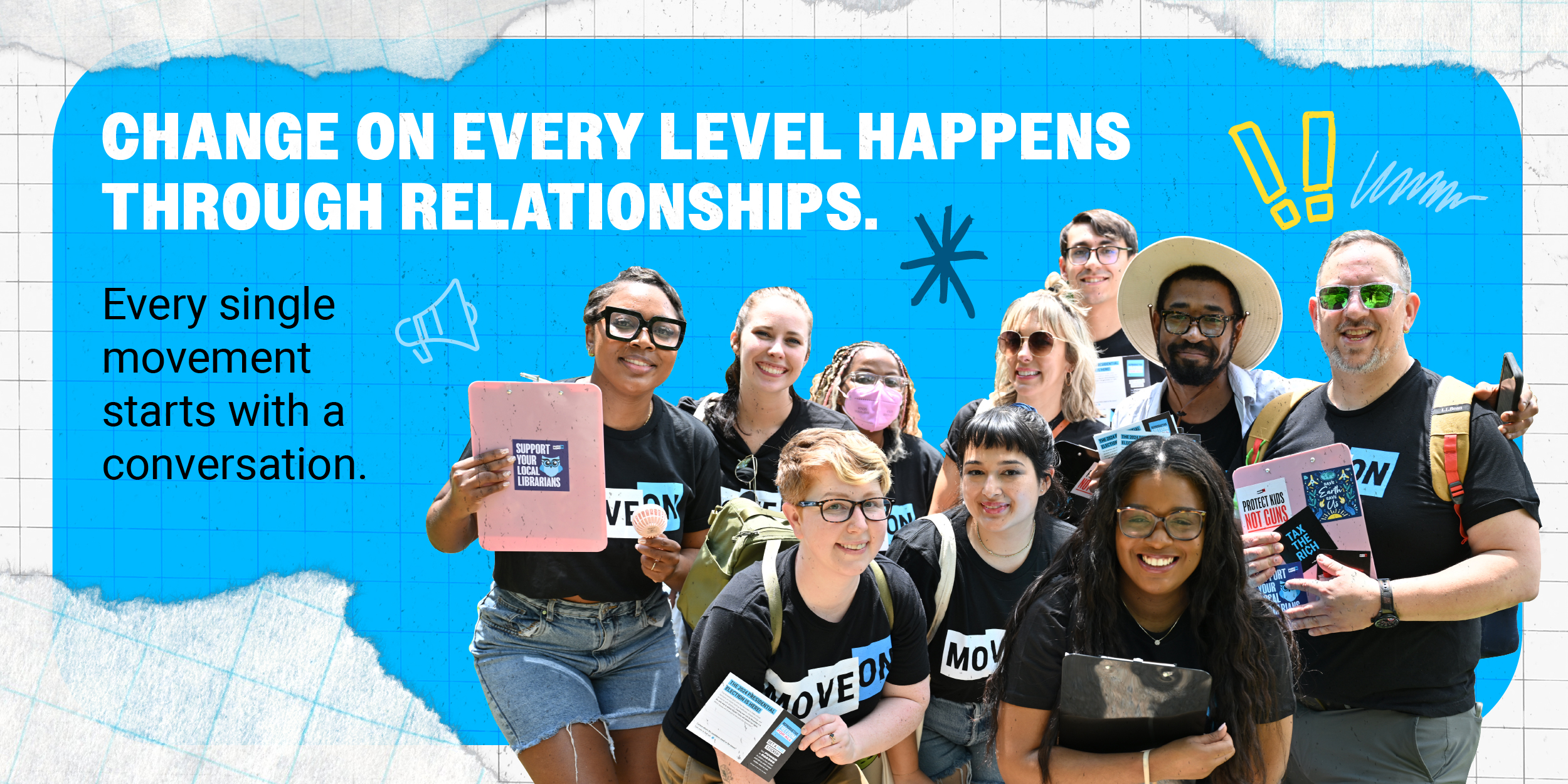
Change on every level happens through relationships. Every single movement starts with a conversation. When we knock on doors to talk to neighbors in our community, we invite action and build the power needed to create real change, and canvassing is the most direct way you can connect with people to create that change.
Next in our series, you’ll learn how you can work with MoveOn to be involved in every part of organizing we just taught you.