
This blog is part of a larger series, called “Organizing 101: Outrage to Organizing.” Previous blogs discussed the basics of organizing, creating petitions, and taking action to move campaigns forward.
Throughout this blog series, we’ll be learning the fundamentals of being an effective leader in your community. So far, we’ve learned how organizing builds power, how petitions can win attention, and how actions move campaigns forward.
Today’s focus is on community and relationship-building as the foundation of leadership.
Why Relationships Are the Core of Organizing
Power comes from people, not just money. Behind every public action is hours and hours of relationship-building. This doesn’t have to seem or sound daunting, because connecting with others who are passionate about the same things is rewarding, fulfilling, and can create lifelong friendships.
Building trust is radical and important work in movements that face division and oppression. Oppressive forces try to divide and pit others against each other, weakening their opposition.
While fighting for justice can be hard, daunting, and feel like a constant uphill battle, it can also bring genuine and deep friendships and relationships. Hard work can be rewarding in terms of progress for the movement, but it can also fulfill your social needs.
The One-On-One Conversation
Building long-lasting relationships with the goal of creating meaningful action includes different types and depths of conversations. You’re not networking or making small talk or focusing solely on heart-to-heart conversations; you’re finding purposeful, values-driven connections with others. You want to connect with others about their passion areas that they can use to drive meaningful change in their and your community.
One-on-one conversations with others are the most important thing organizers can do. Without connecting with others one-on-one, there’s just events and not real organizing. We know how important it is to establish your base, and without connecting with others in a meaningful way, you’re not organizing; you’re just holding events.
What Makes a Strong One-On-One
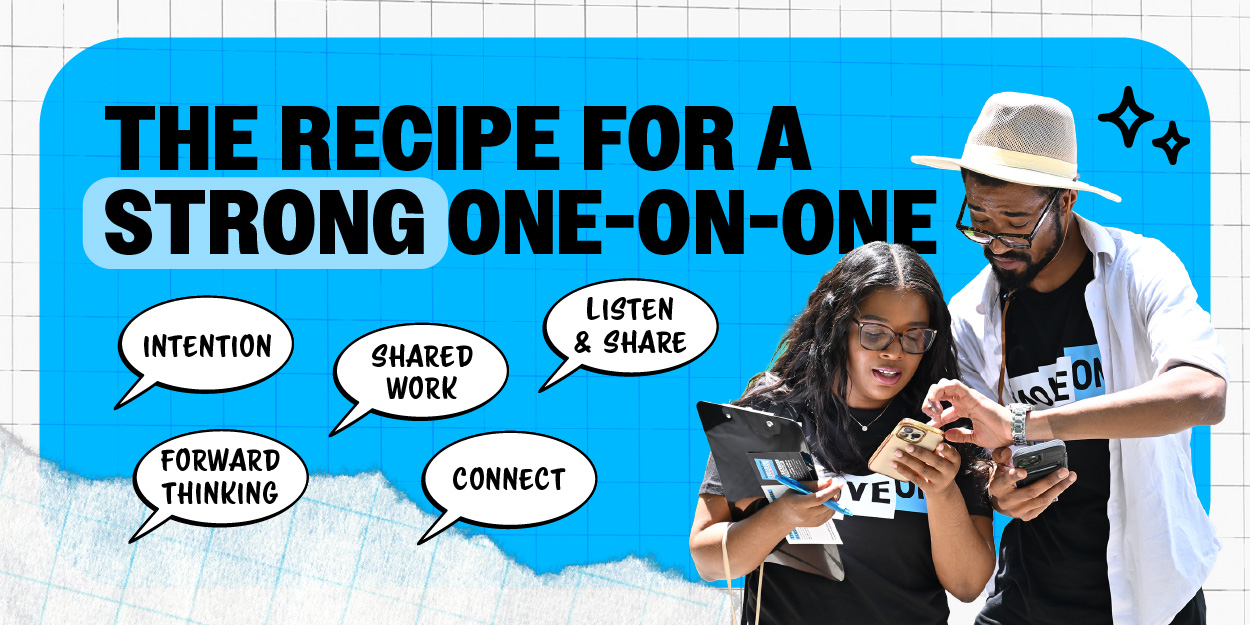
Intention: One-on-one conversations are intentional and have a purpose. They are obviously still genuine and can be heartfelt, but they have multiple purposes, building a trusting relationship and finding a connection with someone who can work with you to make real change that benefits peoples’ lives.
Shared work: The relationship is grounded in working together to make your community a better place; it’s not just a personal friendship.
Forward thinking: Remember, your conversations are anchored in your goals for a world where everyone can thrive. It’s important to link to next steps in movement-building. Ask questions like ‘What world do we want to help create? Who needs to be involved to help us achieve this? What small, vital actions can we/they take? How do we connect emotionally and enable participation?’
Listen, share, connect: Active listening, asking questions, and offering your own vulnerabilities are how you build trust and deepen relationships.
Understanding Self-Interest
It may sound counterintuitive when talking about becoming a leader to make progressive change, but it’s important to acknowledge and find your self-interest. Self-interest means understanding your values, motivations, and lived experiences that drive you to act.
If you’re interested in learning what someone’s self-interests are, try asking “Why do you care?” in addition to “What do you do?”
Understanding and aligning individual self-interest with collective goals strengthens commitment and loyalty.
Structure of a one-on-one
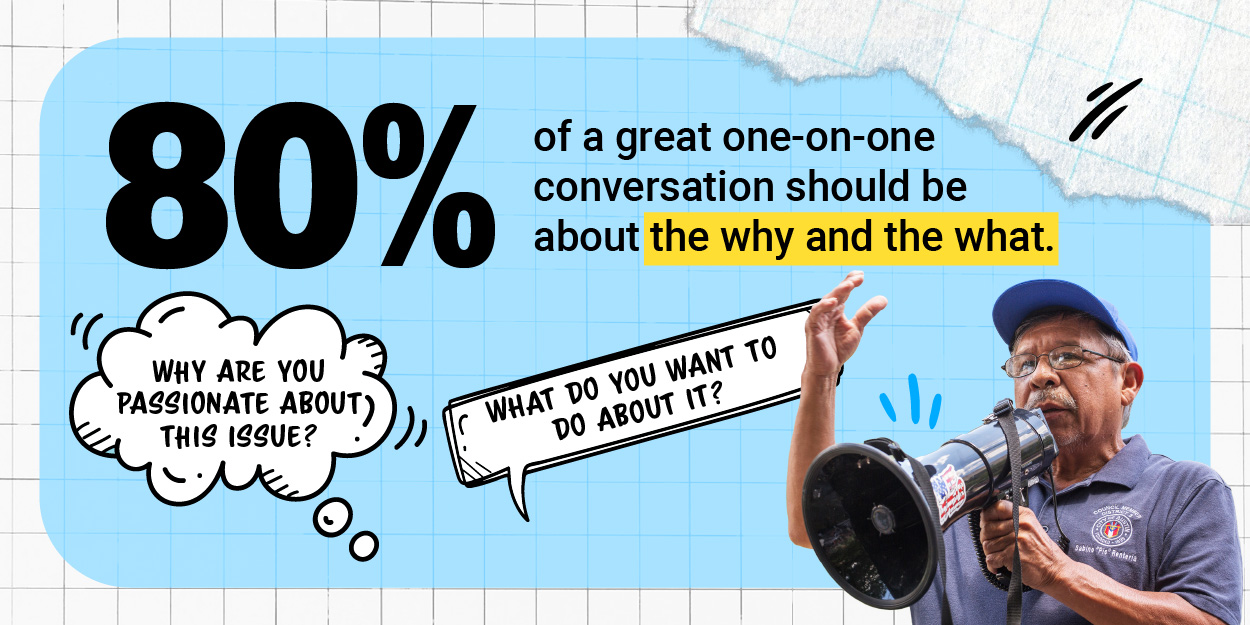
The majority of your discussion (about 80%) should be on the why and the what and basic chit chat making up drastically smaller percentages.
Your goal is to move past surface-level info into the deeper “why” that fuels organizing.
Turning Conversations Into Action
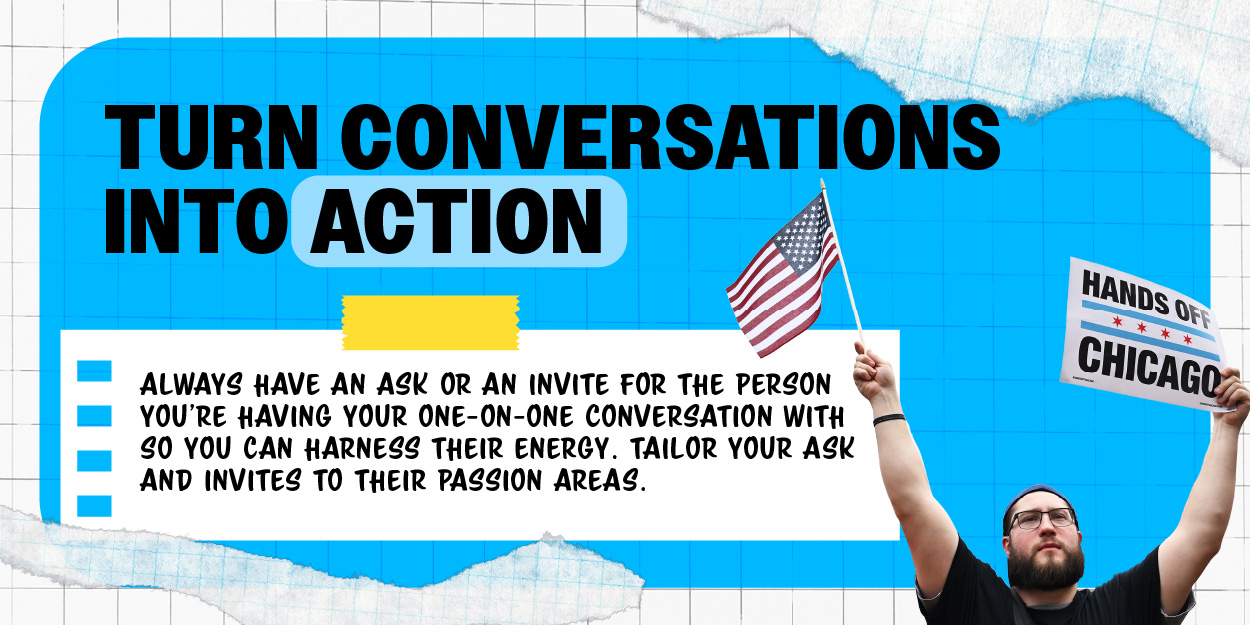
When connecting with others, it’s important to have asks and next steps ready at your disposal. When meeting with others one-on-one, bring invitations to future events, make plans for future conversations, make introductions to others working in the same space, and even ask about their interest in leadership roles.
Remember to tailor the requests to the person. For example,if someone hates public speaking, don’t ask them to give a speech.
Important reminder: Follow up quickly (ideally within 24 hours) to reinforce trust.
Scaling Relationship-Building
The snowflake model is the best way to maintain and grow one-on-one conversations while still having enough time to actually organize and plan.
The snowflake model is when leadership delegates relationship-building to many organizers. This way, the base can grow, and there is enough time and energy to organize action for your cause.
Key Takeaways About Building Community
- People = power. Without relationships, organizing won’t last.
- One-on-ones build community and loyalty. They make the work sustainable.
- Good leaders are good listeners. They center others’ stories, not just their own.
- Relationships keep people in the movement when work gets hard.
Leadership Starts with Listening
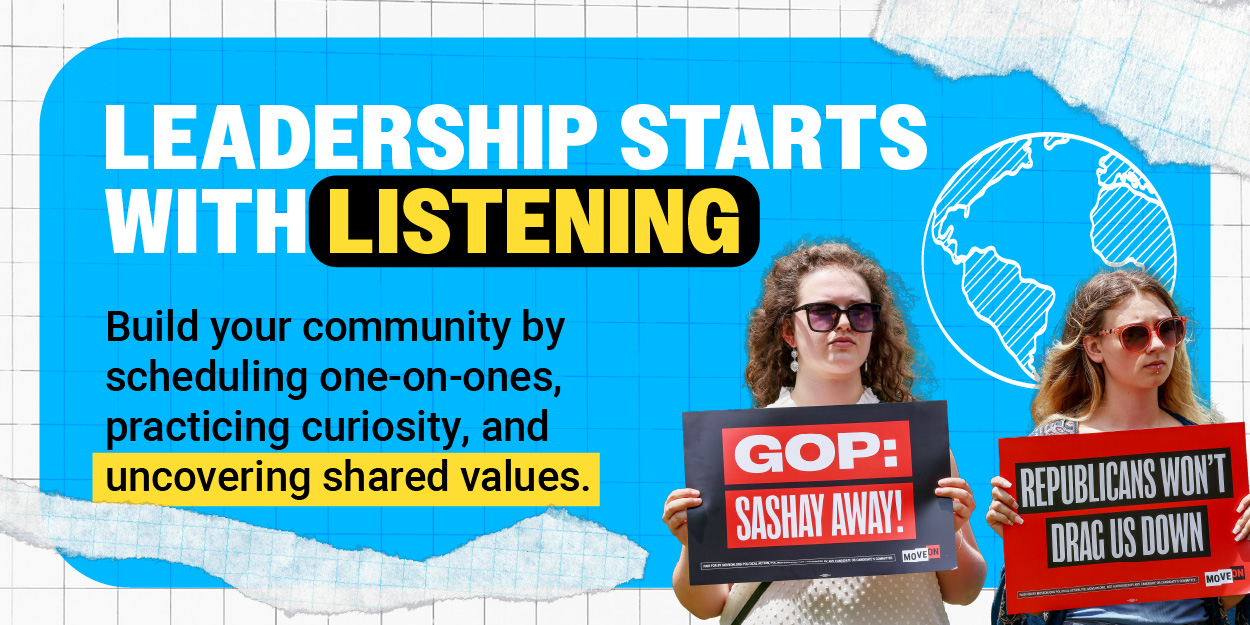
Build your community by scheduling one-on-ones, practicing curiosity, and uncovering shared values.
You can accomplish multiple things with your one-on-ones, like making meaningful connections, creating action plans, inviting others to events and starting to build a strong, passionate base.
Next in our “Organizing 101: Outrage to Organizing” series, we’ll discuss how, where, and when to have dive deeper with conversations.